Log in Shopify Store How to Access

- 1.
Wait—Where’d My Dashboard Go? (And Why’s My Coffee Cold?)
- 2.
What If You’re Locked Out Like a Squirrel Who Forgot Where He Buried the Nuts?
- 3.
Browser Wars: Chrome, Firefox, or “Whatever My Cousin’s Laptop Uses”?
- 4.
Staff Accounts & Permissions: Don’t Hand Out Keys to the Whole Neighborhood
- 5.
That Moment You Realize: “Wait… Is My Store *Actually* Live?”
- 6.
“Is a Shopify Website Free?”—and Other Myths We Gotta Bust
- 7.
The Pros & Cons of Shopify: Let’s Keep It 100
- 8.
Two-Factor Auth: Not Just for Crypto Bros
- 9.
When “Log In” Fails: The 5-Minute Triage Checklist
- 10.
Leveling Up: From “How Do I Log In?” to “How Do I Dominate?”
Table of Contents
Log In Shopify Store
Wait—Where’d My Dashboard Go? (And Why’s My Coffee Cold?)
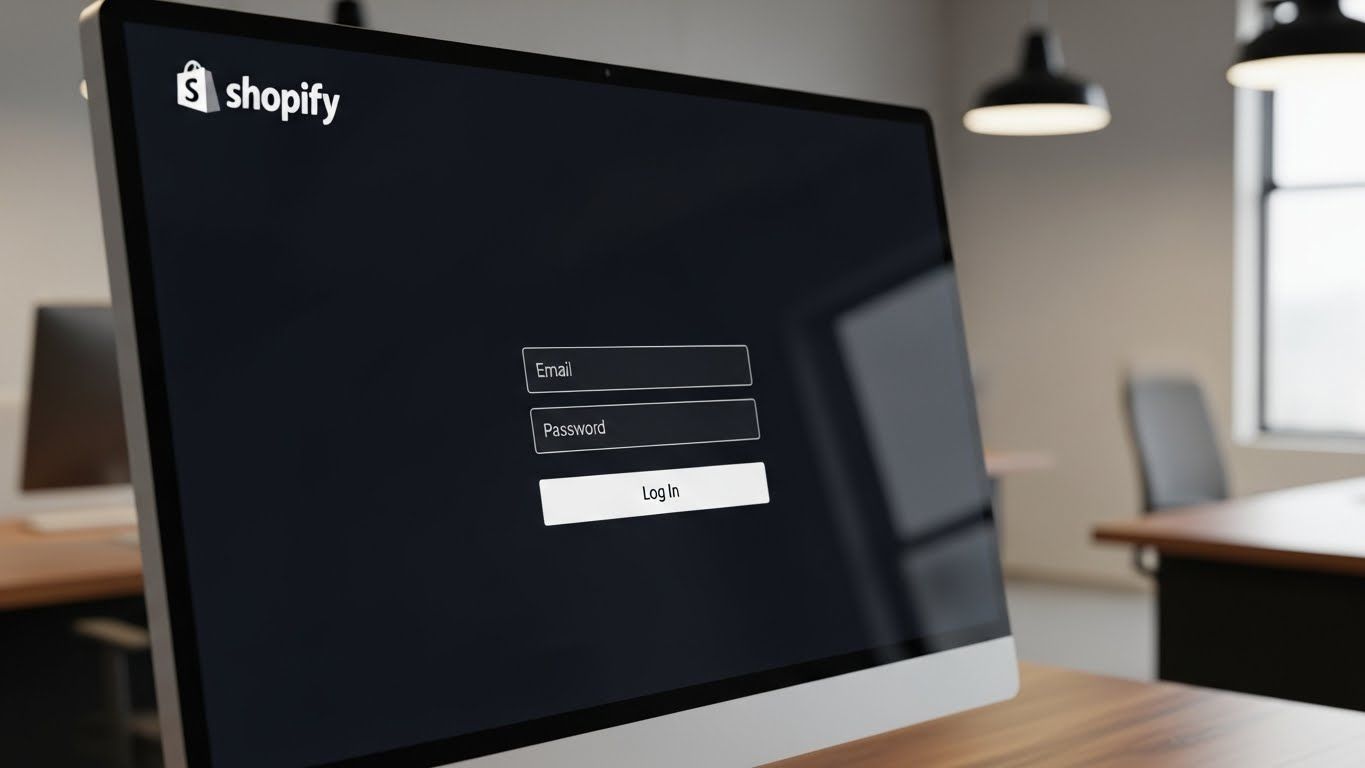
Ever stared at your laptop screen, cursor hovering over *three* open tabs—all labeled “Shopify Login,” none of ‘em working—and wondered, *“Did I forget my password… or my name?”* 😅 Yeah. We’ve been there, pal. You’re not losing it. You’re just tangled in the cozy, slightly chaotic web of log in Shopify store limbo. Maybe you typo’d your email (*“gmail.con” — oof*), or maybe Shopify’s gremlin slipped into your session cookie and whispered, *“Nah, try again in 5.”*
Here’s the truth: log in Shopify store shouldn’t feel like defusing a bomb blindfolded. In fact—it’s *stupid* simple… *once* you know the right door. And no, it’s not shopify.com/admin—that’s a common trap (thanks, outdated Google results). The *real* front gate? https://yourstorename.myshopify.com/admin — or, easier yet, just head to https://www.shopify.com/login and let the big brain do the routing. Type in your store URL or email, hit enter, and—*boom*—you’re back in the cockpit. Pro tip: save that login page as a bookmark named “🚨 DO NOT DELETE 🚨” and thank us later.
What If You’re Locked Out Like a Squirrel Who Forgot Where He Buried the Nuts?
So—password’s gone. Email’s “unrecognizable.” You’re pacing the kitchen, reheating coffee for the third time, muttering, *“I built this whole dang store… and now I can’t even peek at my own analytics?”* Chill. Recovery’s easier than finding parking in Austin during SXSW.
Go to Shopify’s password reset page. Punch in the email tied to your store owner account (not staff, not billing—*owner*). Within 60 seconds, a magic link lands in your inbox—*no password needed.* Click it, set a new one (make it strong: think “PurpleTiger$R0ars!” not “password123”), and *voilà*. Back in business.
But—plot twist—if you *also* lost access to that email? 🙃 Now it’s time to call Shopify Support. Yep, real humans. They’ll ask for proof: domain registration receipt, bank statement showing Shopify charge, or even a photo of your driver’s license (with sensitive bits blurred, obvi). They’re chill, but security’s no joke. Just don’t wait till Black Friday to sort this out—*please*.
Browser Wars: Chrome, Firefox, or “Whatever My Cousin’s Laptop Uses”?
“What browser works best with Shopify?”—asked every human who’s ever stared at a spinning wheel while trying to upload product images. Short version? Chrome (latest version) is Shopify’s golden child. It’s fast, stable, and plays nice with the admin’s JavaScript-heavy UI. Safari? Solid on Mac—but watch for cookie quirks if you’re juggling multiple stores. Firefox? Works fine… unless you’ve got ad-blockers *aggressively* scrubbing scripts (we see you, uBlock die-hards). Edge? Surprisingly competent these days—just keep it updated.
Hot take: avoid *anything* older than two years (looking at you, “IE Mode” in Edge), and *never* use mobile browsers for heavy admin work. Yes, Shopify’s mobile app exists—but try editing a theme liquid file on a 5-inch screen. We’ll wait.
Real talk: if your log in Shopify store keeps glitching, first step ain’t panic—it’s *update your browser*. Then clear cache + cookies for *just* shopify.com. 80% of “broken” logins? Fixed right there. ✨
Staff Accounts & Permissions: Don’t Hand Out Keys to the Whole Neighborhood
You’re scaling. You hire a VA, a designer, a fulfillment buddy—and suddenly, your cousin’s nephew is editing discount codes *and* tweaking tax settings. 🤦♂️ Yikes. A clean log in Shopify store strategy means *granular permissions*. Shopify lets you assign roles like:
– Staff: view orders only
– Editor: manage products/content, no finances
– Finance: see payouts, *not* products
– Owner: the nuclear codes (guard this like your last slice of pizza)
Never give “Owner” to freelancers. Ever. A designer doesn’t need to shut down your store—or change your Shopify plan to “Basic” to save $12 (true story). Bonus hack: use *two-factor authentication* (2FA) for *every* staff account. It’s free, takes 30 seconds to set up (Authy or Google Authenticator), and stops 99.9% of account takeovers. Your future self—sipping margaritas while sales auto-fulfill—will high-five you.
That Moment You Realize: “Wait… Is My Store *Actually* Live?”
Logging in is one thing. Knowing *what* you’re logging into? That’s where newbies freeze. You’ve got:
– Development store (free, for building/testing—has Shopify branding, can’t process real payments)
– Live store (paid plan, your real biz, SSL’d, ready to sell)
– Duplicate store (for A/B testing themes or checkout flows)
If you’re trying to log in Shopify store and see a giant banner saying *“This is a development store”*—congrats! You’re in the sandbox. Cool for testing, but customers can’t buy. To go live? Pick a plan (Basic starts at $29/mo), enter billing, and—*poof*—the banner vanishes.
Confused why your “live” store still looks like a ghost town? Check: did you *publish* your theme? (Themes → Actions → Publish). Did you add products *and* mark them “Active”? Tiny oversights. Big headaches.
“Is a Shopify Website Free?”—and Other Myths We Gotta Bust
Let’s clear the fog: No, a live, selling Shopify website isn’t free. But—big *but*—you can build, test, and *almost* launch for $0 using a **development store**. No credit card needed. You get full admin access, app installs, theme edits… just no real transactions (test orders only). Perfect for learning, prototyping, or showing clients a demo.
Once you’re ready to sell? Plans kick in:
| Plan | Price (USD/mo) | Best For |
|---|---|---|
| Starter | $5 | Social sellers (link-in-bio, TikTok/IG checkout) |
| Basic | $29 | Serious starters (2 staff, full store, reports) |
| Shopify | $79 | Growing brands (5 staff, lower fees, pro reports) |
| Advanced | $299 | Scaling empires (15 staff, custom reports, API access) |
Hidden perk? Shopify offers *90-day trials* during select promos (check their homepage). And no—there’s no “forever free” tier for live stores. Anyone claiming otherwise? Probably selling snake oil… or a Shopify scam. Stick to the official path, folks.
The Pros & Cons of Shopify: Let’s Keep It 100
“What are the pros and cons of Shopify?”—asked by every entrepreneur mid-decision paralysis. We’ll keep it raw:
Pros:
✓ Speed: Go from idea to live store in <2 hours
✓ Ecosystem: 8,000+ apps (Klaviyo, Recharge, Loox—plug ‘n play)
✓ Reliability: 99.98% uptime (their servers don’t nap)
✓ Support: 24/7 live chat, phone, email—real humans, no bots
✓ Scalability: Handles $100 or $1M Black Fridays (same backend)
Cons:
✗ Monthly cost: Adds up (plan + apps + transaction fees on non-Shopify Payments)
✗ Customization limits: Liquid templating is powerful—but not full-stack freedom (looking at you, headless devs)
✗ Content limits: Blog is… functional. Not WordPress-level (yet)
✗ Theme lock-in: Switching themes can break custom code (backup first!)
Honestly? For 95% of indie brands, the pros *crush* the cons. Log in Shopify store daily, and you’ll feel the love in the details—like auto-SSL, fraud analysis, and tax calc that *just works*. But if you need pixel-perfect control over every <div>? Mayyyybe look at BigCommerce or custom build. For the rest of us? Shopify’s the co-pilot we didn’t know we needed.
Two-Factor Auth: Not Just for Crypto Bros
Let’s get real: if you’re not using 2FA on your log in Shopify store, you’re basically leaving your front door unlocked with a sign: *“Free Stuff Inside (Please Don’t)”*. Shopify makes it stupid-easy: in Settings → Users and Permissions → your profile → *Enable two-factor authentication*. Scan the QR with Authy (our fave—syncs across devices) or Google Authenticator. Boom. Now, even if someone phishes your password? They hit a wall.
Pro move: generate *backup codes* and stash ‘em in a password manager (or—*gasp*—a physical safe). Lost your phone mid-holiday? No panic. Also: require 2FA for *all* staff. Non-negotiable. Your store’s revenue, customer data, and reputation? Worth the 30-second setup. *Seriously.*
When “Log In” Fails: The 5-Minute Triage Checklist
Stuck at the login gate? Don’t rage-quit. Run this checklist—*in order*:
1️⃣ URL check: Are you at https://www.shopify.com/login — *not* shopify.net or myshopify-login.com (scam alert!)
2️⃣ Email accuracy: Is it the *owner* email? (Check old receipts—Shopify bills monthly)
3️⃣ Password reset: Try the “Forgot password?” link—even if you *think* you know it
4️⃣ Browser hygiene: Clear cache + cookies *for shopify.com only* (Settings → Privacy → Cookies)
5️⃣ Incognito mode: Open Chrome → Ctrl+Shift+N → try login fresh
If *still* stuck? Check Shopify’s status page—maybe it’s them, not you. (Rare—but happens.) And *never* enter credentials on a page that doesn’t show the green padlock + “shopify.com” in the address bar. Phishers are *sneaky*.
Leveling Up: From “How Do I Log In?” to “How Do I Dominate?”
So—you’ve mastered the log in Shopify store dance. Now what? Time to think like a strategist, not just a user. Dive into *Analytics* (not just sales—bounce rate, conversion funnel). Set up *automations*: abandoned cart emails, post-purchase upsells, review requests. And *optimize your theme*—not just colors, but *speed*. A 1-sec delay = 7% drop in conversions (Google, 2023).
Want more? Swing by the Public Market homepage for fresh, no-BS guides. Go deeper in the Ecommerce section—or snag our step-by-step on budget builds: Inexpensive Ecommerce Website: How to Build. No fluff. Just fuel.
Frequently Asked Questions
How do I log into my Shopify store?
Go to https://www.shopify.com/login, enter the email tied to your store owner account (or your store’s .myshopify.com URL), and type your password. If you’ve enabled two-factor authentication, enter the code from your authenticator app next. For faster access, bookmark https://yourstorename.myshopify.com/admin—but always verify the URL to avoid phishing. A smooth log in Shopify store starts with using the official login portal and keeping credentials secure.
What are the pros and cons of Shopify?
Pros of Shopify include rapid setup (store live in hours), reliable 99.98% uptime, 24/7 support, and a massive app ecosystem for scaling. Cons? Monthly costs add up (plan + apps + fees), customization is limited by Liquid templating, and advanced users may crave more backend control. For most entrepreneurs, the trade-offs are worth it—especially when every log in Shopify store feels like stepping into a well-oiled command center.
Is a Shopify website free?
A *live, selling* Shopify website is not free—but you can build and test one at $0 using a development store (no credit card needed). To go live and accept real payments, you need a paid plan: Starter ($5/mo for social selling), Basic ($29/mo for full stores), or higher tiers. Shopify occasionally offers extended trials (e.g., 90 days), but there’s no permanent free tier for operational stores. So while you can prep your log in Shopify store for free, going public costs a few bucks—and delivers serious ROI.
What browser works best with Shopify?
Google Chrome (latest version) is the most stable and fully supported browser for log in Shopify store and admin tasks. Safari works well on macOS but may have cookie quirks. Firefox is reliable unless aggressive ad-blockers interfere. Microsoft Edge is now solid—but avoid legacy “IE Mode.” Always keep your browser updated, clear cache periodically, and never use outdated browsers or mobile browsers for heavy admin work. A clean browser = fewer headaches.
References
- https://help.shopify.com/en/manual/your-account/logging-in
- https://www.shopify.com/pricing
- https://www.shopify.com/blog/ecommerce-website-speed
- https://status.shopify.com