Best Ecommerce Site Designs To Inspire
- 1.
Defining the Essence of best ecommerce site designs in a Hyperconnected Marketplace
- 2.
The Four Pillars of E‑Commerce: Mapping the Terrain Before You Build
- 3.
Blueprints & Brainstorms: How to Architect an E‑Commerce Experience That *Feels* Like Home
- 4.
Product Pages: Where Love Letters Meet Legal Disclaimers
- 5.
Visual Alchemy: When Aesthetics Drive Conversion, Not Just Applause
- 6.
Checkout Flow: The Make-or-Break Moment (Spoiler: Most Sites Fail It)
- 7.
Mobile‑First Isn’t a Buzzword—It’s the Whole Damn Symphony
- 8.
Data, Not Dogma: How A/B Testing Turns Guesswork Into Gospel
- 9.
Accessibility: Not Compliance—Competitive Advantage
- 10.
Future-Proofing: AI, Voice, & The Quiet Rise of “Invisible” Commerce
Table of Contents
best ecommerce site designs
Defining the Essence of best ecommerce site designs in a Hyperconnected Marketplace
Ever scrolled through a site so slick it felt like swiping through a dream—only to realize you’ve just dropped $98 on artisanal pickles and a Bluetooth-enabled cactus? Yeah, welcome to the era where best ecommerce site designs aren’t just pretty—they’re psychic. In today’s digital bazaar, a stellar layout isn’t window dressing; it’s the velvet rope, the jazz trio, *and* the bartender who knows your usual—all rolled into one seamless UX symphony. We’ve moved past the clunky “add-to-cart-and-pray” days. Now? If your bounce rate’s higher than your caffeine tolerance, honey, your best ecommerce site designs need an intervention—and maybe a UX therapist.
The Four Pillars of E‑Commerce: Mapping the Terrain Before You Build
Before we geek out over parallax scrolling and micro-interactions, let’s ground ourselves: e‑commerce ain’t one monolith—it’s four distinct tribes, each with its own vibe, pain points, and design non‑negotiables. Think of it like urban planning: you wouldn’t drop a food truck in a library, right? Same energy. Here’s the breakdown:
- B2C (Business‑to‑Consumer): Sleek, emotive, impulse‑friendly. Think Glossier—pastel hues, cheeky copy, checkout in under 30 seconds. Your best ecommerce site designs here thrive on FOMO + frictionless flow.
- B2B (Business‑to‑Business): Bulk orders, tiered pricing, PO uploads—this is the “Excel spreadsheet in a tuxedo” crowd. A stellar best ecommerce site designs for B2B feels like a concierge service: logged-in dashboards, saved configurations, and real-time inventory sync.
- C2C (Consumer‑to‑Consumer): eBay, Etsy, Depop—chaotic charm with a side of trust signals. Here, best ecommerce site designs lean hard on *social proof*: verified reviews, seller badges, “sold nearby” geotags.
- C2B (Consumer‑to‑Business): Think influencer collabs or crowdsourced designs (e.g., Threadless). Your best ecommerce site designs must empower *creator control*—easy uploads, royalty dashboards, collaborative previews.
Mess up the match, and your best ecommerce site designs become a museum of good intentions—visited once, forgotten forever.
Blueprints & Brainstorms: How to Architect an E‑Commerce Experience That *Feels* Like Home
So—how *do* you design an e‑commerce site that doesn’t just function but *resonates*? Step one: ditch the wireframe tyranny. Start with *customer journey mapping*—not as a corporate exercise, but as improv theater. Role‑play: “You’re a tired nurse shopping for running shoes at 2 a.m., one hand on cold brew, the other squinting at your phone.” What does she *need*? Speed. Clarity. Maybe a “just ship my usual size” button. That’s* where best ecommerce site designs begin—not in Figma, but in empathy.
Then comes structure: mobile‑first (duh), but *thumb‑first*—87% of m‑commerce happens in portrait mode, with the thumb doing 92% of the tapping (Statista, 2024). So keep CTAs in the sweet zone: bottom third, centered. And navigation? Ditch the mega‑menu spaghetti. Progressive disclosure + predictive search = your new BFF. A true best ecommerce site designs whispers, “I know what you want before you do”—like that barista who slides your oat‑latte across the counter *before* you open your mouth.
Product Pages: Where Love Letters Meet Legal Disclaimers
Ah, the product page—the digital equivalent of a first date. Too stiff? Ghosted. Too vague? Swipe left. Too *salesy*? Blocked. So what’s the Goldilocks zone for best ecommerce site designs here? Human-first storytelling with specs as backup dancers.
Take Warby Parker: high-res 360° spins? ✅ But the *magic*? “This frame fits medium faces and pairs well with sarcasm.” That’s voice. That’s vibe. That’s best ecommerce site designs doing emotional labor. Add video demos (unboxing, real‑life use), user-generated content galleries (“#MyWarbyMoment”), and *dynamic* sizing tools (e.g., “Upload a pic—we’ll overlay the frame”). Oh, and let’s talk trust: 1‑click returns, carbon footprint badge, “in‑stock ETA” in real-time… because in 2025, transparency isn’t optional—it’s the entry fee.
Visual Alchemy: When Aesthetics Drive Conversion, Not Just Applause
Here’s a hot take: *minimalism isn’t always minimal.* Sometimes, “clean” just means “boring as beige toast.” The best ecommerce site designs today? They’re bold, textured, *alive*—like stumbling into a Brooklyn loft party where the host knows *exactly* how much mezcal to pour.
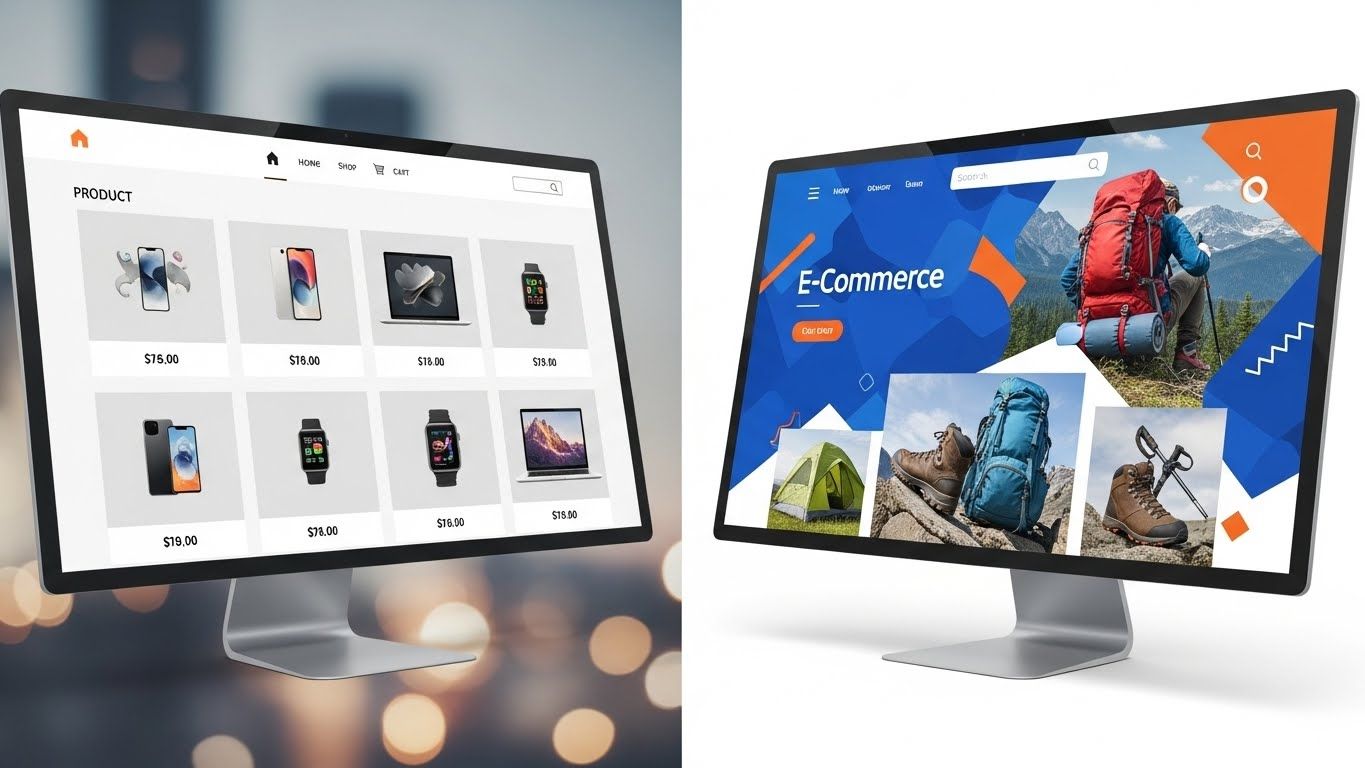
See that? Layered typography. Asymmetrical grids that *breathe*. Color palettes pulled from actual sunsets (not Pantone swatches). And motion—*oh*, the motion: subtle hover lifts, scroll-triggered reveals, cart icons that *wink* when you add something. But—and this is critical—it’s all in service of *clarity*. No flashy distraction. Every animation answers a question: “Is this clickable?” “Where am I?” “What happens next?” A true best ecommerce site designs doesn’t just look expensive—it *feels* intentional. Like a perfectly tailored blazer: structure + swagger, zero bulk.
Checkout Flow: The Make-or-Break Moment (Spoiler: Most Sites Fail It)
Let’s be real: 69.5% of carts get abandoned (Baymard Institute, 2024). And no—it’s *not* just “window shopping.” It’s your checkout page demanding their firstborn, SSN, and blood type *before* showing shipping costs. Oof.
The best ecommerce site designs treat checkout like a VIP lounge: guest option *always* available, progress bar visible (but not stressful), and *zero* redirects. Single‑page? Even better. Auto-detect address from ZIP. Apple Pay / Google Pay pre‑highlighted. And for the love of UX, show shipping *before* the email field. Bonus points for post-purchase delight: “Your order’s packed! Meet your fulfillment ninja: *Carlos, 3 yrs on team, loves punk rock & precision packing.*” See? Human. Memorable. That’sbest ecommerce site designs turning transaction into connection.
Mobile‑First Isn’t a Buzzword—It’s the Whole Damn Symphony
If your best ecommerce site designs “work” on mobile, congrats—you’re at baseline. If they *sing*? Now we’re talking. Mobile isn’t desktop’s ugly cousin anymore—it’s the headliner. And users? They’re ruthless. 53% will ditch a site that takes >3 seconds to load (Google, 2024). So compress those hero videos. Lazy-load galleries. Ditch heavy plugins. And *please*: no pop‑ups that hijack the entire screen *before* the page loads. We see you, coupon spammer. We *judge* you.
Pro move? *Thumb ergonomics.* Sticky nav at the *bottom* (iOS Tab Bar style), swipeable product carousels, “tap to call support” embedded in the cart. Oh—and dark mode compatibility. Not just a toggle, but *auto‑sync* with OS preference. Because nothing kills vibe faster than squinting at a blinding white screen at midnight while ordering emergency gummy bears.
Data, Not Dogma: How A/B Testing Turns Guesswork Into Gospel
“I *feel* like red converts better.” Cool story—now show me the heatmap. The best ecommerce site designs aren’t born from genius epiphanies; they’re forged in the fire of *iterative testing*. Button copy: “Buy Now” vs. “Treat Yo’Self”? Hero image: lifestyle shot vs. 3D render? Checkout: 3‑step vs. 1‑screen? Test. Measure. Kill your darlings.
Tools like Optimizely or VWO let you run multivariate tests *without* dev tickets. And don’t just track sales—watch *behavior*: scroll depth, rage clicks, exit pages. One brand found 41% of users rage-clicked the size chart—so they made it *expandable inline*. Cart recovery jumped 22%. That’s the power of *listening* to data, not your ego. Best ecommerce site designs evolve—they don’t fossilize.
Accessibility: Not Compliance—Competitive Advantage
Here’s the tea: 1 in 4 adults in the US lives with a disability (CDC, 2024). Ignore them, and you’re not just unethical—you’re leaving *billions* on the table. But best ecommerce site designs treat accessibility like great lighting: it makes *everyone* look better.
Alt text that’s *descriptive*, not robotic (“red wool scarf, fringed ends, draped over wooden chair in sunlit loft” vs. “scarf_001.jpg”). Keyboard-navigable menus. Sufficient color contrast (4.5:1 minimum). Captions on *all* videos—even the 5‑second unboxing. And semantic HTML—because screen readers don’t care about your fancy div soup. Bonus? Accessible sites rank higher (Google loves clean markup) and convert better (clear hierarchy = less cognitive load). Inclusion isn’t charity—it’s *smart design*.
Future-Proofing: AI, Voice, & The Quiet Rise of “Invisible” Commerce
Alright, let’s peek around the corner. Chatbots that *actually* resolve issues? Check. Visual search (“upload pic → find similar”) going mainstream? Yep. But the *real* frontier? Invisible commerce—where the site recedes, and the *experience* takes center stage.
Imagine: You’re watching a cooking reel. Tap “ingredients,” and—*poof*—they’re in your cart at Thrive Market. Or your smart fridge detects low oat milk, auto-orders, and syncs with your calendar (“delivery during yoga class—good?”). Best ecommerce site designs in 2025 aren’t about *pages*—they’re about *punctures* in the customer journey where value flows seamlessly. And yeah, AI helps: personalized product bundles, dynamic pricing, even generating *unique* alt text per user preference (“describe like a food critic” vs. “describe for colorblind mode”). Still—tech serves the human, not vice versa. The most “advanced” best ecommerce site designs will feel like magic *because* you forget you’re on a “site” at all. And if you’re hunting for real-world inspo? Start with Public Market, explore the Ecommerce hub, or dive deep with Ecommerce Web Development Firm: Top Choices.
Frequently Asked Questions
What are the 4 types of e commerce?
The four core models are B2C (Business-to-Consumer, like Nike.com), B2B (Business-to-Business, like Alibaba’s wholesale portal), C2C (Consumer-to-Consumer, like eBay or Etsy), and C2B (Consumer-to-Business, like influencer marketplaces where creators pitch to brands). Each demands a unique approach to best ecommerce site designs—B2C thrives on emotion and speed, while B2B leans into efficiency and data transparency.
How to design e-Commerce?
Start with user journey mapping—not wireframes. Prioritize mobile thumb zones, reduce cognitive load (fewer choices, clearer CTAs), and embed trust signals early (secure badges, real-time stock). A true best ecommerce site designs flow feels intuitive: browse → desire → verify → buy → feel thrilled. Test *everything*—button color, form length, error messages—with tools like Hotjar or Optimizely. Remember: design isn’t decoration; it’s behavioral psychology in CSS.
Which design is better for an eCommerce product?
There’s no universal “better”—only *contextually brilliant*. For high-consideration items (e.g., furniture), best ecommerce site designs emphasize AR previews, detailed specs, and comparison tools. For impulse buys (snacks, accessories), focus on bold visuals, scarcity cues (“3 left!”), and 1‑click checkout. The golden rule? Match design depth to decision complexity. Don’t drown a $5 sticker in a 10‑step configurator—your users *will* revolt.
Can ChatGPT create an eCommerce website?
Short answer: not end‑to‑end—but it’s a killer co‑pilot. ChatGPT can draft product descriptions, generate schema markup, suggest UX copy, and even outline sitemap structures for best ecommerce site designs. But it can’t code a responsive cart, integrate Stripe securely, or optimize Core Web Vitals. Think of it as your 24/7 brainstorm buddy—not your dev team. For full builds, pair it with no‑code tools (Webflow, Shopify) or human devs who *get* conversion psychology.
References
- https://www.statista.com/statistics/1105911/mobile-commerce-share-of-e-commerce-sales-us/
- https://baymard.com/lists/cart-abandonment-rate
- https://www.cdc.gov/disability/data/index.html
- https://web.dev/vitals/