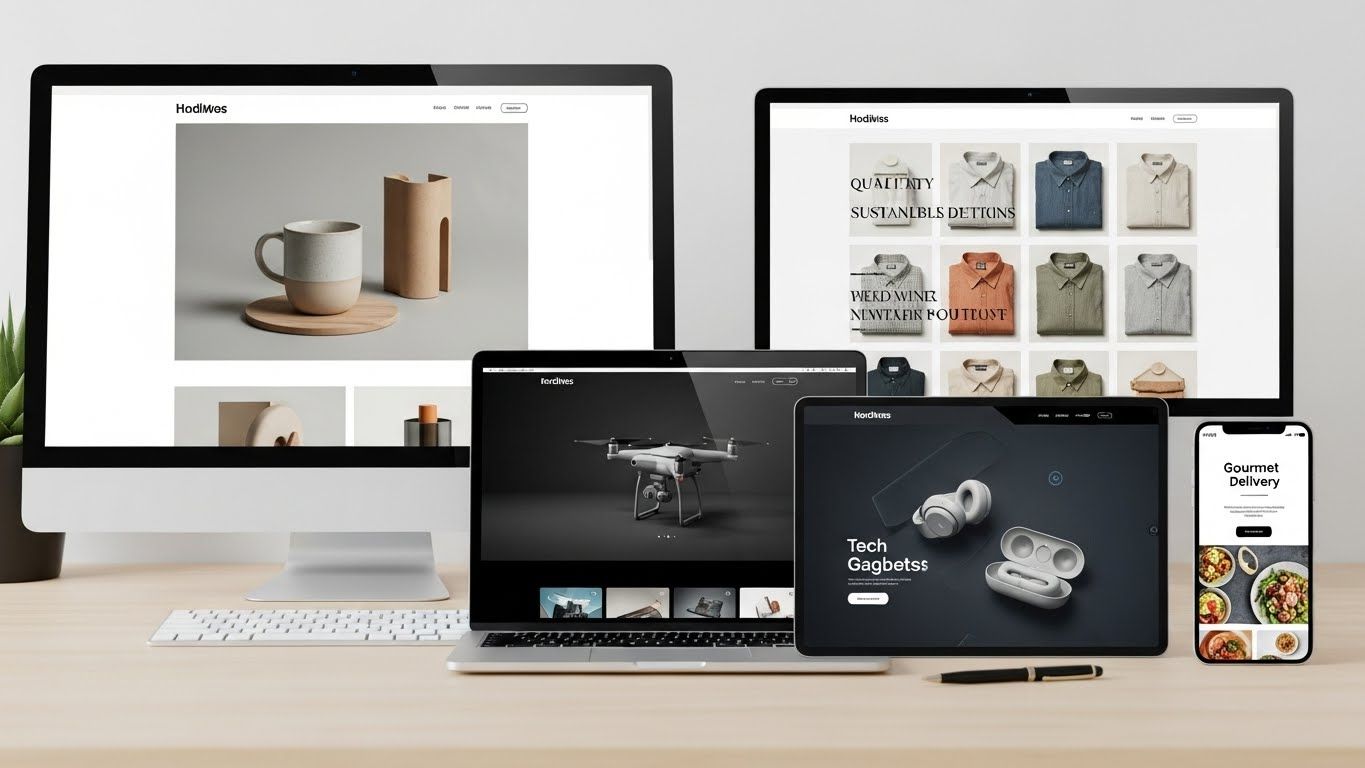
Ecommerce Web Design Solution for Your Business
- 1.
Yo, Is Your Online Store a “Site” or a Silent Sales Rep Working 24/7? Let’s Talk.
- 2.
So… What *Exactly* Is an E‑Commerce Solution? (No, It’s Not Just “A Website With a Cart”)
- 3.
The Big Six: Mapping the E‑Commerce Universe (Because One Size *Definitely* Ain’t Fit All)
- 4.
What Are the *Real* Solutions of E‑Commerce? (Spoiler: It’s Not “Just Use Shopify”)
- 5.
Visual Poetry in Motion: When UI/UX Becomes a Revenue Driver
- 6.
Mobile Ain’t “Mobile”—It’s *The* Platform (And Your ecommerce web design solution Better Know It)
- 7.
Checkout: The Make-or-Break Moment (Where Most ecommerce web design solution Dreams Go to Die)
- 8.
What’s the Best Software for E‑Commerce? (Depends—Are You Starting or Scaling?)
- 9.
Budget Truths: What a *Real* ecommerce web design solution Costs in 2025 (No Fluff, Just Facts)
- 10.
The Future’s Knocking: What’s Next for ecommerce web design solution in 2026 and Beyond?
Table of Contents
ecommerce web design solution
Yo, Is Your Online Store a “Site” or a Silent Sales Rep Working 24/7? Let’s Talk.
Ever walked into a store where the lights flicker, the AC’s on strike, and the salesperson’s still on their lunch break *and* their third espresso? Yeah—that’s what most DIY “online shops” feel like in 2025. Looks cute on the ‘Gram, but try checking out? *Error 500. Please cry quietly.* Honey, if your ecommerce web design solution doesn’t convert like a Southern preacher at a tent revival, you’re not selling—you’re begging. A real ecommerce web design solution isn’t a template slapped on Shopify. It’s strategy dressed in CSS, empathy engineered into JavaScript, and *profit* baked into every pixel. Think less “brochure,” more “best friend who knows your size, your budget, *and* your snack weakness.”
So… What *Exactly* Is an E‑Commerce Solution? (No, It’s Not Just “A Website With a Cart”)
Let’s cut the jargon fog with a machete: an ecommerce web design solution is a *complete system* that lets businesses sell stuff online—**without losing their minds**. It’s not one thing. It’s the whole damn orchestra:
- Frontend experience: What users *see* and *feel*—responsive grids, intuitive nav, product storytelling that doesn’t sound like a robot wrote it after three Red Bulls.
- Backend logic: Inventory sync, dynamic pricing, user roles, tax engines that *actually* know Chicago’s weird-ass district rules.
- Integrations: Payment gateways (Stripe, PayPal, *even* crypto if you’re wildin’), email platforms, ERP/CRM handshakes.
- Maintenance & optimization: Security patches, A/B testing rigs, performance tuning (because 3‑second load time = 53% bounce, Google said so).
A true ecommerce web design solution doesn’t just *exist*—it *evolves*. It’s built to learn, adapt, and—*gasp*—make you money while you sleep. (Side note: if your dev team says “we’ll fix scalability later,” run. Like, *sprint*.)
The Big Six: Mapping the E‑Commerce Universe (Because One Size *Definitely* Ain’t Fit All)
Y’know how people still say “e‑commerce” like it’s one flavor of ice cream? Nah. There’s *six* major models—and your ecommerce web design solution better match the recipe. Try serving B2B UX to Gen‑Z DTC shoppers? That’s like putting sriracha on vanilla pudding. Confusing. Regrettable.
| Type | Vibe Check | ecommerce web design solution Must-Haves |
|---|---|---|
| B2C | Emotion + speed. Think Glossier, Patagonia. | Mobile‑first flows, visual storytelling, 1‑click upsells, social proof carousels. |
| B2B | Efficiency + trust. Think Grainger, Thomasnet. | Bulk ordering, tiered pricing, saved carts, PO uploads, ERP sync. |
| C2C | Community + chaos. Think Etsy, Depop. | Seller dashboards, review systems, dispute workflows, location‑based discovery. |
| C2B | Creator power. Think Fiverr (freelance), Ko-fi (tips). | Portfolio builders, royalty tracking, collaboration tools, rights mgmt. |
| D2C (Direct-to-Consumer) | Brand love + data ownership. Think Warby Parker, Allbirds. | Personalization engines, post‑purchase engagement, loyalty loops, zero 3rd‑party dependency. |
| M2C (Marketplace-to-Consumer) | Scale + curation. Think Amazon, Wayfair. | Vendor onboarding, review aggregation, comparison tools, AI‑driven recs. |
Miss the mark, and your slick ecommerce web design solution becomes a digital museum—visited once, forgotten by Tuesday.
What Are the *Real* Solutions of E‑Commerce? (Spoiler: It’s Not “Just Use Shopify”)
Alright, real talk: tools ≠ solutions. A hammer’s not a house. Same energy. The *actual* ecommerce web design solution components? They’re layered—like a damn croissant:
Infrastructure Layer
Hosting (Vercel, Netlify, AWS), CDN (Cloudflare), edge caching. Because if your hero image loads slower than your Wi‑Fi at a coffee shop? Bye, customer. A pro ecommerce web design solution bakes speed into the foundation—not as an afterthought.
Commerce Engine Layer
Headless (Commercetools, Medusa), monolithic (Shopify Plus, BigCommerce), or hybrid (Hydrogen + Oxygen). Your ecommerce web design solution choice here dictates *everything*: customization ceiling, dev cost, time‑to‑market.
Experience Layer
This is where design *lives*: React/Vue frontends, PWA magic, micro‑interactions, voice/search UX. The difference between “meh” and “take my money” lives in 200ms of animation delay.
Optimization Layer
Real‑time A/B testing (Optimizely), session replay (Hotjar), predictive analytics (Segment + ML models). A mature ecommerce web design solution doesn’t guess—it *knows*.
Visual Poetry in Motion: When UI/UX Becomes a Revenue Driver
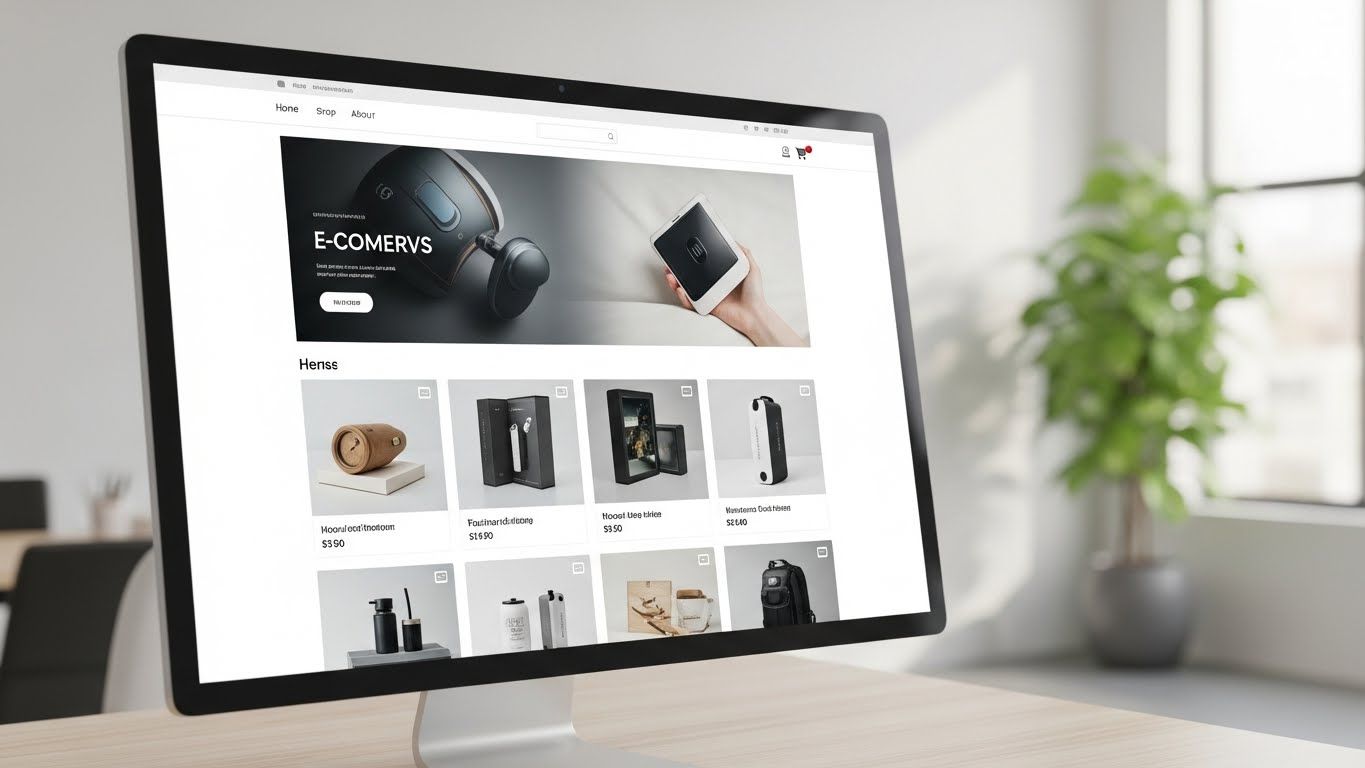
Let’s be clear: *pretty* doesn’t pay bills. But *intuitive*? *Delightful*? *Frictionless*? Oh yeah—that prints money. The best ecommerce web design solution teams don’t hire “designers.” They hire *behavioral psychologists who know Figma*.
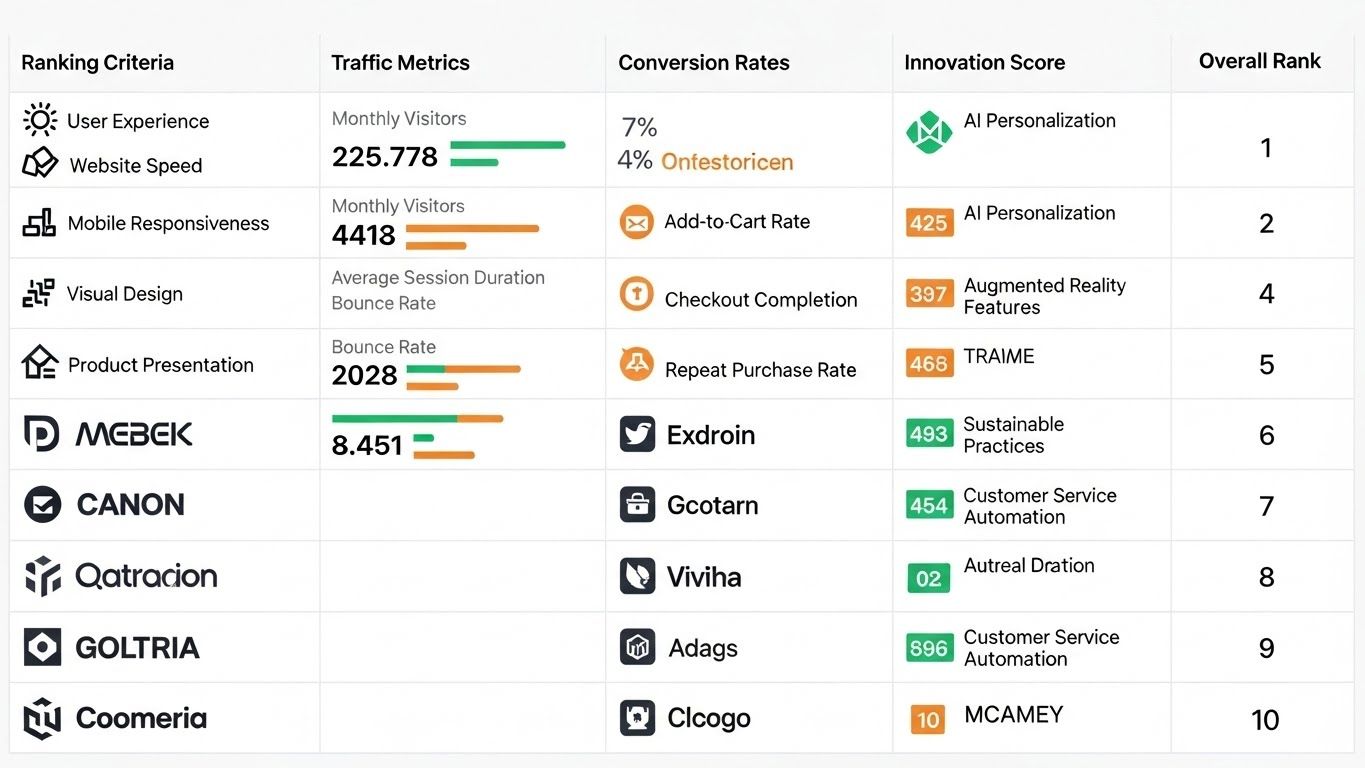
That shot? That’s not just “clean layout.” That’s *thumb‑zone CTAs*, *progressive disclosure* navigation, *dynamic* hero content based on weather + location (“Rainy in Seattle? Cozy blanket bundle—50% off”). It’s color contrast that passes WCAG *and* makes your brand pop. It’s font pairings that whisper “premium” without saying a word. A true ecommerce web design solution doesn’t *ask* for trust—it *earns* it in the first 3 seconds. (Fun fact: 47% of users judge credibility *solely* on design—Stanford Web Credibility Project, 2024.)
Mobile Ain’t “Mobile”—It’s *The* Platform (And Your ecommerce web design solution Better Know It)
Newsflash: “mobile‑friendly” is dead. Long live *mobile‑native*. 72% of e‑commerce revenue now flows through phones (Statista, 2025)—but most sites still treat mobile like an afterthought. *Yikes.*
A next‑gen ecommerce web design solution? It’s built *bottom‑up* for thumbs: sticky bottom nav (à la iOS), swipeable galleries, camera‑first search (“snap product → find similar”), and *no* pop‑ups that hijack the screen before the page loads (we see you, coupon spammers—we *judge* you). Bonus points for haptic feedback on cart adds or Apple Pay success. Because tactile joy = brand love. And love? That’s recurring revenue, baby.
Checkout: The Make-or-Break Moment (Where Most ecommerce web design solution Dreams Go to Die)
Cart abandonment rate in 2025? Still hovering around 69.8% (Baymard). And no—it’s *not* “they just weren’t serious.” It’s your checkout demanding their life story *before* showing shipping costs. *C’mon, now.*
A high‑performing ecommerce web design solution treats checkout like a VIP lounge: guest option *always* visible, progress bar *non*-stressful (3 steps max), address autofill *from ZIP alone*, and payment methods ordered by *local preference* (Apple Pay first in SF, GoPay? Not here—this is English US, folks). Oh, and real‑time validation: “Card number incomplete” *as they type*—not after hitting submit. Small tweaks. Big lifts. One brand reduced drop‑offs by 31% just by moving the email field *below* shipping estimate. *Mic drop.*
What’s the Best Software for E‑Commerce? (Depends—Are You Starting or Scaling?)
“Best” is a trap. Like asking “what’s the best car?”—if you’re hauling lumber, a Tesla Roadster *ain’t* it. Same goes for ecommerce web design solution stacks:
“Shopify’s great—if your ambition tops out at $10M ARR. Try scaling past $50M with native Shopify? You’ll hit walls faster than a Roomba in a maze.”
— CTO, DTC brand (who asked to stay off the record, but sent us a case of bourbon)
Here’s the real breakdown (USD pricing, annual estimate):
| Platform | Ideal For | Pros | Cons |
|---|---|---|---|
| Shopify | Startups, <$5M/yr | Launch in days. App ecosystem galore. Reliable. | Limited customization. “Theme jail.” Cost balloons fast. |
| BigCommerce | Mid‑market, $5M–$30M | Better B2B tools. Native multi‑store. Strong APIs. | Steeper learning curve. Fewer dev resources. |
| Commercetools / Medusa | Scale‑ups, $30M+ | True headless. Infinite flexibility. Future‑proof. | High dev cost. Needs elite talent. |
| Custom Node.js + Stripe | Unicorns, marketplaces | Total control. Bespoke logic. Max performance. | $250k+ build. Long timeline. Ongoing maintenance. |
The right ecommerce web design solution isn’t about the shiniest tool—it’s about *alignment* with your growth curve. Don’t overbuild. Don’t under-engineer. Just… *build smart*.
Budget Truths: What a *Real* ecommerce web design solution Costs in 2025 (No Fluff, Just Facts)
Let’s kill the myth: “You can get a pro site for $3k.” Sure—if “pro” means “looks okay on desktop, crashes on iPhone, and requires a blood sacrifice to update.” Here’s what the market *actually* bears (USD, full-cycle, inclusive of strategy, design, dev, QA, launch):
- Starter MVP (Shopify + light custom): $20,000 – $45,000
- Growth Tier (Headless PWA, integrations): $65,000 – $120,000
- Enterprise (Multi‑region, ERP sync, 24/7 SLA): $180,000 – $400,000+
And *please*—avoid fixed‑price bids for complex builds. Scope *will* shift. A trustworthy ecommerce web design solution partner uses phased sprints + transparent billing. They’d rather you succeed than overcharge and ghost post-launch.
The Future’s Knocking: What’s Next for ecommerce web design solution in 2026 and Beyond?
While most shops are still arguing over dark mode defaults, the *leading* ecommerce web design solution labs are already shipping:
- Conversational UX: Chat-style shopping (“show me vegan leather boots under $120, size 9”) → no more filters.
- Edge‑personalization: Serving *unique* UIs per user—based on device, location, weather, even Spotify playlist (yes, really).
- “Invisible” Commerce: Buy *within* TikTok, Instagram, even podcasts—no redirect, no friction.
Bottom line? The best ecommerce web design solution isn’t about keeping up—it’s about *pulling ahead*. And if you’re ready to stop patching and start *pioneering*, start with Public Market, explore the Ecommerce insights hub, or go deep with Creating Online Shopping Website: A Guide. Because the future of selling online? It’s not coming. It’s *here*—and it’s gorgeous.
Frequently Asked Questions
What is an ecommerce solution?
An e‑commerce solution is an integrated system that enables online selling—from storefront design and product management to secure checkout, payment processing, and post‑purchase engagement. A full‑service ecommerce web design solution combines technology, UX strategy, and business logic to turn browsers into buyers—reliably, scalably, and beautifully.
What are the solutions of e-commerce?
Core e‑commerce solutions include: platform selection (Shopify, headless, custom), responsive UI/UX design, secure payment integration, inventory & order management, marketing automation (email/SMS), analytics & A/B testing, and ongoing optimization. A holistic ecommerce web design solution weaves these into one seamless, high‑converting experience.
What is the best software for ecommerce?
There’s no universal “best”—only “best *for your stage*.” Shopify excels for startups; BigCommerce for mid‑market B2B/B2C hybrids; Commercetools or Medusa for scale‑ups needing full control. The right ecommerce web design solution matches your revenue goals, technical capacity, and growth roadmap—not hype cycles.
What are 6 types of e-commerce?
The six dominant models are: B2C (Business‑to‑Consumer), B2B (Business‑to‑Business), C2C (Consumer‑to‑Consumer), C2B (Consumer‑to‑Business), D2C (Direct‑to‑Consumer), and M2C (Marketplace‑to‑Consumer). A smart ecommerce web design solution tailors architecture, UX, and features to the specific model—not a one‑size‑fits‑all template.
References
- https://www.statista.com/statistics/1105911/mobile-commerce-share-of-e-commerce-sales-us/
- https://baymard.com/lists/cart-abandonment-rate
- https://webcredibility.org/research/
- https://www.shopify.com/research/ecommerce-trends