
Ecommerce Page Design Best Practices
- 1.
What Makes a Great ecommerce page design Click-Worthy?
- 2.
How User Behavior Shapes Modern ecommerce page design Trends
- 3.
The Invisible Architecture: Navigating the UX Backbone of ecommerce page design
- 4.
Visual Storytelling and the Emotional Pull of ecommerce page design
- 5.
Mobile-First Isn’t Optional—It’s the Whole Dang Playbook for ecommerce page design
- 6.
Speed, Performance, and the Unspoken Contract of ecommerce page design
- 7.
Trust Signals and the Psychology of “Safe to Click” in ecommerce page design
- 8.
Accessibility: Why Inclusive ecommerce page design Is Just Smart Business
- 9.
Conversion Rate Optimization (CRO) Tactics Embedded in ecommerce page design
- 10.
The Future-Proof ecommerce page design: AI, Personalization, and Beyond
Table of Contents
ecommerce page design
What Makes a Great ecommerce page design Click-Worthy?
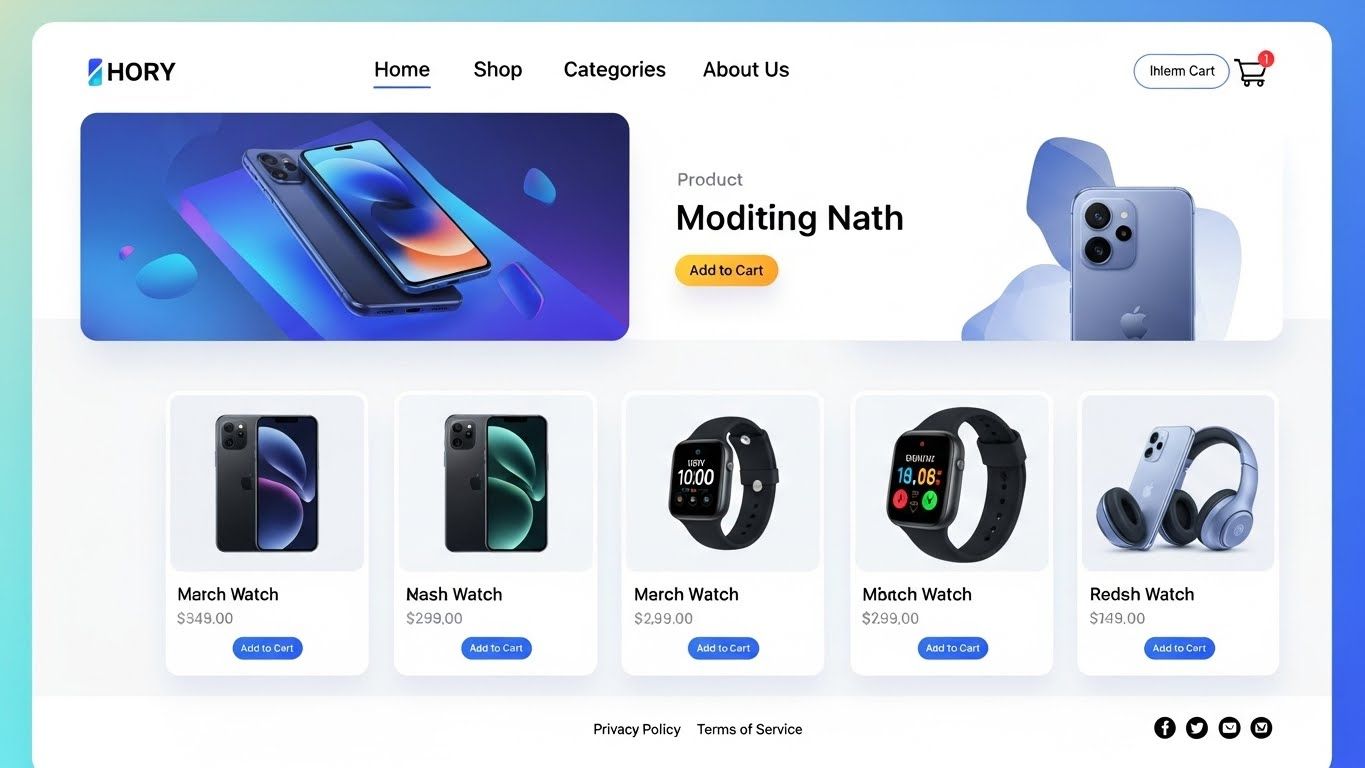
Ever scrolled through a site, clicked *once*, and bounced faster than a basketball on hardwood? Yeah—me too. Turns out, folks don’t window-shop online like they do at the mall; they window-*scroll*. And if your ecommerce page design doesn’t grab ‘em in under 2.6 seconds (yep, that’s the brutal average), you’re already losing. We’re talkin’ bounce rates climbing like a squirrel on Red Bull—and nobody wants that. So what’s the magic sauce? A blend of visual rhythm, intuitive flow, and that *je ne sais quoi* that whispers, “Go on, add to cart—you deserve it.” Think of it like a honky-tonk bar: neon lights draw ya in, the bartender remembers your usual, and the jukebox plays your jam. In digital terms? That’s strategic whitespace, cohesive color psychology, and micro-interactions that wink at the user like they’re in on a secret. An ecommerce page design ain’t just pixels—it’s hospitality with a URL.
How User Behavior Shapes Modern ecommerce page design Trends
Humans be weird—especially online. We swipe left on love but right on discounts; we’ll read a 3-paragraph Yelp review for tacos but skip your *Terms & Conditions* like it’s plague mail. Behavioral studies (and let’s be real, gut instinct backed by heatmaps) show that shoppers scan pages in an F-pattern or Z-pattern, depending on device. Desktop? Eyes hit top-left logo, cruise right, drop down the left gutter. Mobile? It’s a Z: top banner → hero image → CTA button. So if your *Buy Now* button’s hangin’ out near the footer like it’s shy at a BBQ, honey, you’re missin’ the moment. A solid ecommerce page design puts the money where the eyes go—literally. Hot zones: above the fold, left-aligned CTAs, sticky carts on scroll. And don’t even get us started on thumb zones. Mobile shoppers ain’t using styluses—they’re thumbin’ it like they’re texting their ex at 2 a.m. Your ecommerce page design better respect that anatomy—or get ghosted.
The Invisible Architecture: Navigating the UX Backbone of ecommerce page design
Good ecommerce page design doesn’t *feel* designed—it feels inevitable. Like gravity. You don’t *think* about how to get from product grid to checkout; you just… do. That’s the UX backbone workin’—quiet, essential, and seriously underappreciated. We’re talkin’ mega menus that don’t mega-confuse, breadcrumb trails that don’t lead to witch houses, and search bars that actually *understand* when you typo “sneekrs.” Ever typed “blu dresss” and still got results? That’s semantic search flexing. And filters? Don’t make me scroll through 47 pages of “size: unisex medium” trying to find a hoodie that *fits*. A winning ecommerce page design treats navigation like a Southern host: warm, anticipatory, and *never* making you ask twice. “Y’all want coffee or sweet tea?” → “Filter by color, price, or eco-certified?” Same energy.
Visual Storytelling and the Emotional Pull of ecommerce page design
Let’s cut the fluff: people don’t buy *products*—they buy *versions of themselves*. The runner who crushes 5Ks at dawn? That’s not just a $120 sneaker; that’s discipline, sweat, and sunrise glory. A masterful ecommerce page design doesn’t *show* the item—it *invites* you into the lifestyle. High-res hero shots? Sure. But layered over that: ambient light, subtle motion (think *gentle* parallax, not a Vegas slot machine), and lifestyle context that whispers, “This could be *you*—on a mountain, at brunch, nailing that Zoom call in silk PJs.” Pro tip: user-generated content (UGC) is the secret sauce. A staged model in a studio looks *expensive*; a real human in their messy kitchen grinning with your ceramic mug? That’s *trust*. That’s the difference between “meh” and “heck yes—I need this *now*.” Your ecommerce page design is the stage; let your customers be the stars.
Mobile-First Isn’t Optional—It’s the Whole Dang Playbook for ecommerce page design
Let’s be real: if your ecommerce page design looks like a Picasso sketch on mobile—elements colliding, CTAs hiding like introverts at a rave—you’re already 73% behind. (Yep, Statista says 72.9% of global e-commerce traffic in 2025 comes from mobile. *Mic drop.*) Mobile-first means *designing for the smallest screen first*, then scaling up—not the other way ‘round. Thumb-friendly tap targets (minimum 48x48px, Google says), compressed images that load before your coffee brews, and checkout flows shorter than a TikTok skit. Oh—and autocorrect that *actually* helps? Gold. Nothing kills conversion like your phone changing “wireless earbuds” to “wireless ear*butts*.” 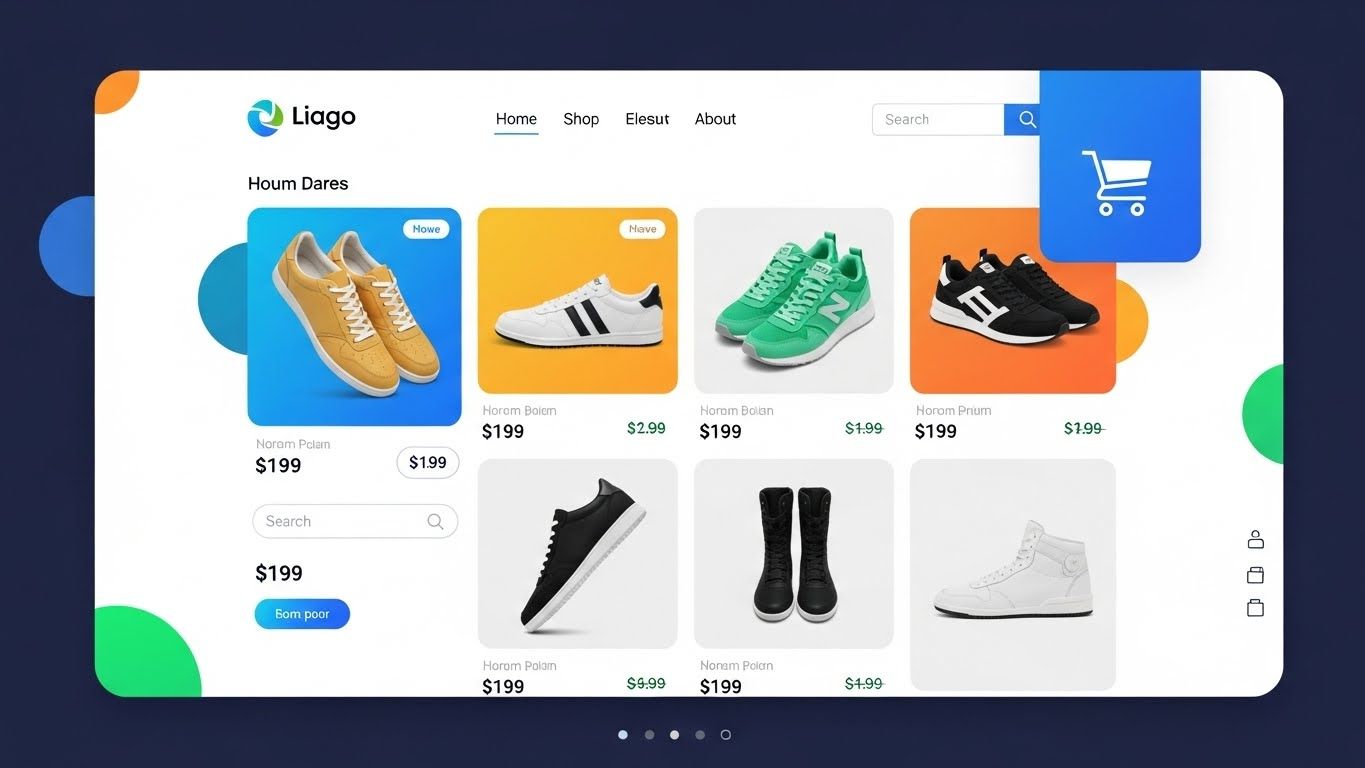 Funny story: one brand tested two versions of their cart icon—one with a tiny badge, one without. The *with* version increased mobile checkouts by 19%. Why? ‘Cause humans love a little red dot like magpies love shiny things. Your ecommerce page design should flirt with instinct—not fight it.
Speed, Performance, and the Unspoken Contract of ecommerce page design
Here’s a cold truth: 53% of mobile users abandon a site that takes longer than 3 seconds to load (Google, 2024). Three seconds—that’s less time than it takes to microwave a Hot Pocket *and* regret it. Your ecommerce page design could be Picasso-meets-UI-god, but if it loads like dial-up in 1998? *Poof.* Gone. So what’s under the hood? Image optimization (WebP > JPEG, sorry not sorry), lazy loading (only load what’s *in view*), and killing render-blocking JS like it’s last season’s trend. Bonus points for preconnect hints and CDN love. We once audited a boutique skincare site—swapped PNGs to AVIF, deferred non-critical scripts, and bam: load time dropped from 5.2s to 1.8s. Conversions jumped 34% in two weeks. Speed isn’t a *feature*—it’s the unspoken contract: *“I respect your time.”* Break that, and your ecommerce page design is just digital graffiti.
Trust Signals and the Psychology of “Safe to Click” in ecommerce page design
Ever hovered over a “Checkout” button like it’s a suspicious gas station burrito? Yeah. Trust isn’t *given* online—it’s *earned*, pixel by pixel. SSL padlock? Bare minimum. Real trust signals in ecommerce page design:
- Live stock counters (“Only 3 left!” → FOMO, activated)
- Verified buyer badges (not just “⭐️⭐️⭐️⭐️⭐️”—but “*Jane D., bought 2 days ago*”)
- Payment icons *above* the fold (Visa, Amex, Apple Pay—visible *before* scroll)
- Return policy in footer—and header (“Free returns, no drama” should echo like a mantra)
Accessibility: Why Inclusive ecommerce page design Is Just Smart Business
Over 1.3 billion people—roughly 1 in 6 globally—live with some form of disability (WHO, 2024). Ignoring them in your ecommerce page design isn’t just uncool; it’s leaving *billions* on the table. Think:
Color Contrast & Readability in ecommerce page design for Low-Vision Users
That trendy pastel-on-white? Gorgeous. Unreadable for 246 million people with moderate-to-severe vision impairment. WCAG 2.2 demands a contrast ratio of at least 4.5:1 for body text. Tools like axe or Lighthouse’ll flag violations faster than a hawk spots roadkill. Bolder fonts? Larger tap targets? Semantic HTML (no `
Conversion Rate Optimization (CRO) Tactics Embedded in ecommerce page design
CRO ain’t just A/B tests and pop-ups (though, full disclosure, exit-intent modals *do* work—when they’re not screaming “LAST CHANCE!!!”). Real CRO is baked into your ecommerce page design like cinnamon in snickerdoodles: subtle, essential, and makes everything better. Examples?
- Sticky add-to-cart bars on product pages (scrolls with you—no back-to-top gymnastics)
- Progress indicators at checkout (“Step 2 of 4: Shipping” → reduces abandonment by 22%, Baymard)
- Inline validation—red/green cues *as you type*, not after you hit submit
- Social proof carousels mid-page (“Customers also bought…” with real-time activity)
The Future-Proof ecommerce page design: AI, Personalization, and Beyond
Y’all ever land on a site and it *knows* you? Like it read your search history, your DMs, and your Spotify Wrapped? That’s hyper-personalization—and it’s not sci-fi anymore. AI-driven ecommerce page design dynamically adjusts:
- Hero banners shift based on location, weather, or past behavior (“Rainy in Seattle? Cozy knits, 20% off.”)
- Product排序 reorders in real-time (hot items rise, stale inventory gets nudged)
- Chatbots with memory (“Welcome back, Alex! Still thinkin’ ‘bout those hiking boots?”)
Need inspiration? Cruise over to Public Market for real-world examples—or dive into our deep-dive on E-commerce trends. And if you’re buildin’ on Wix? Don’t miss the step-by-step guide: Ecommerce on Wix: How to Set Up.
Frequently Asked Questions
What is an e-commerce page?
An e-commerce page is a digital storefront—think of it as your 24/7 corner shop, but with Wi-Fi and no awkward small talk. It’s where products live, prices shine, and carts get filled. A well-crafted ecommerce page design blends aesthetics, function, and trust to turn browsers into buyers. From homepage hero sections to checkout confirmations, every element should serve the user’s journey—no dead ends, no confusion, just smooth sailing (and maybe a discount code at the end).
How to create an eCommerce page?
Start with a platform (Shopify, BigCommerce, WooCommerce), pick a responsive theme, and *customize like your sales depend on it*—’cause they do. Upload high-quality product images, write benefit-driven copy (not just specs!), and wire up payment gateways (Stripe, PayPal—keep it simple). Then, obsess over the details: mobile responsiveness, page speed, clear CTAs, and trust badges. Test relentlessly. A killer ecommerce page design isn’t built in a day—but it *can* be launched in one (if you skip lunch and ignore your cat).
What are the 4 types of e-commerce?
The big four: B2C (Business-to-Consumer—like Nike.com), B2B (Business-to-Business—think Alibaba for bulk orders), C2C (Consumer-to-Consumer—eBay, Etsy), and C2B (Consumer-to-Business—think influencers pitching to brands). Each demands a tailored ecommerce page design: B2B needs bulk pricing tables and quote requests; C2C thrives on UGC and seller ratings; C2B leans into portfolio layouts. One-size-fits-all? Nah. Your ecommerce page design should speak the dialect of your audience.
Do I need an LLC to start an eCommerce business?
Legally? Nope—you can start selling as a sole proprietor (hello, Etsy shop). But *smartly*? An LLC is your personal asset’s bodyguard. It separates your biz debt from your house, car, and that vintage vinyl collection. Plus, it builds credibility—customers trust “Smith & Co. LLC” more than “johns-cool-stuff-42.” And tax flexibility? Chef’s kiss. While your ecommerce page design draws ‘em in, your LLC keeps ‘em (and your savings) safe. Consult a CPA—but yeah, get the LLC. YOLO only applies to skydiving, not liability.
References
- https://www.shopify.com/research/mobile-commerce-statistics
- https://www.baymard.com/lists/cart-abandonment-rate
- https://www.w3.org/WAI/standards-guidelines/wcag/
- https://www.gartner.com/en/marketing/insights/articles/ai-personalization-ecommerce
Creating a Online Store a Step Guide
Step-by-step guide for creating a online store from scratch. Use free online storefront or paid plans for growth. Click to create your store now
Best Design for Ecommerce Website a Guide
Implement best design for ecommerce website principles. Boost sales with best ecommerce homepage design elements. Click to optimize your layout
Good Products To Sell Online a Guide
Identify good products to sell online that match your niche and audience preferences perfectly and launch your successful store today by clicking here to access our premium content

Best Products for Selling Online Top Tips
Uncover the best products for selling online in current market trends and scale your e-commerce brand effectively by clicking the button below to visit our comprehensive analysis page

Making a Website To Sell Products a Guide
Get step-by-step instructions for making a website to sell products that converts visitors into buyers easily and start building your store now by clicking to visit our detailed tutorial

Shopify Digital Goods How To Sell
Learn everything about selling shopify digital goods including setup tips and marketing tricks to boost your sales fast so please click here to read our full guide on our site
