Build a Website to Sell Products Easily
- 1.
So… You Made a Thing. Now How the Heck Do You Get It Into Strangers’ Hands?
- 2.
Free ≠ Flimsy: Yes, You *Can* Launch Without Opening Your Wallet (At First)
- 3.
The Big 4 Showdown: Which Builder Actually *Gets* You?
- 4.
Your First 5 Products: Less Is More (Seriously, Stop Adding)
- 5.
Themes That Don’t Scream “I Used a Template” (Because Originality = Trust)
- 6.
Photos That *Sell*—Not Just Show (No DSLR Required)
- 7.
Checkout: Where Dreams (and Carts) Go to Die—Unless You Fix This
- 8.
SEO: Not Just Keywords—It’s *Storytelling* for Google
- 9.
Launch ≠ Done: Your First 72 Hours Are Everything
- 10.
When to Scale—and When to Stay Small (No Shame in Either)
Table of Contents
build a website to sell products
So… You Made a Thing. Now How the Heck Do You Get It Into Strangers’ Hands?
Ever held your handmade ceramic mug—glaze just right, weight *chef’s kiss*—and thought, *“I could sell a thousand of these…”* only to stare blankly at your laptop like it’s judging you? 😅 Yeah. We’ve been there. You don’t need a CS degree or a Silicon Valley cofounder to **build a website to sell products**. You just need the right tools, a smidge of courage, and maybe one less Netflix binge. Truth is: the barrier to entry’s never been lower. In 2025, you can go from “idea in Notes app” to “live store with real sales” in under 48 hours—and *without* maxing out your credit card. Wild, right? Let’s unpack how—no jargon, no gatekeeping, just real talk from folks who’ve launched 37 stores (and killed 12 of ‘em. RIP, artisanal beard oil).
Free ≠ Flimsy: Yes, You *Can* Launch Without Opening Your Wallet (At First)
Hot take: *“Can you make a website to sell stuff for free?”* — yes, but with asterisks bigger than Texas. Platforms like Shopify (3-day trial, no card), Wix (free plan + $16/yr domain), and Big Cartel (free forever—seriously) let you **build a website to sell products** *before* you spend a dime. You’ll get: ✓ Full product pages ✓ Secure checkout (via Stripe/PayPal) ✓ Mobile responsiveness ✓ Basic analytics What’s *not* free? A custom domain ($10–15/yr), premium themes ($50–180 one-time), and—eventually—transaction fees if you stick with free tiers (e.g., Wix charges 2.9% + $0.30 on free plan). But for validation? Test your idea. List 5 products. Share the link. See who bites. If 3 people buy? *Now* upgrade. **build a website to sell products** isn’t about perfection—it’s about *proof*. And proof? That’s priceless.
The Big 4 Showdown: Which Builder Actually *Gets* You?
“What is the best website builder for selling products?”—ask Reddit, and you’ll get 47 heated replies, 3 memes, and one guy still using Magento in 2025. Let’s cut the noise:
| Platform | Best For | Starting Cost (USD/mo) | Transaction Fees |
|---|---|---|---|
| Shopify | Growth-focused brands (50+ SKUs, scaling fast) | $39 | 0% w/ Shopify Payments; 0.5–2% w/ others |
| Wix | Visual storytellers (artists, designers, boutique shops) | $27 (Business Basic) | 0% on paid plans |
| Big Cartel | Solo creators (≤100 products, anti-bloat) | $0–$9.99 | 0% — ever |
| Squarespace | Aesthetic-first brands (photographers, luxury goods) | $23 (Commerce Basic) | 0% on Commerce plans |
Real talk? If you’re sellin’ screen-printed tees from your garage? **Big Cartel** or **Wix**. Launching a wellness brand with subscriptions + bundles? **Shopify**. Publishing a coffee-table book with AR previews? **Squarespace**. The “best” isn’t universal—it’s the one that *disappears* so your product can *shine*. And that’s the heart of **build a website to sell products**: get outta your own way.
Your First 5 Products: Less Is More (Seriously, Stop Adding)
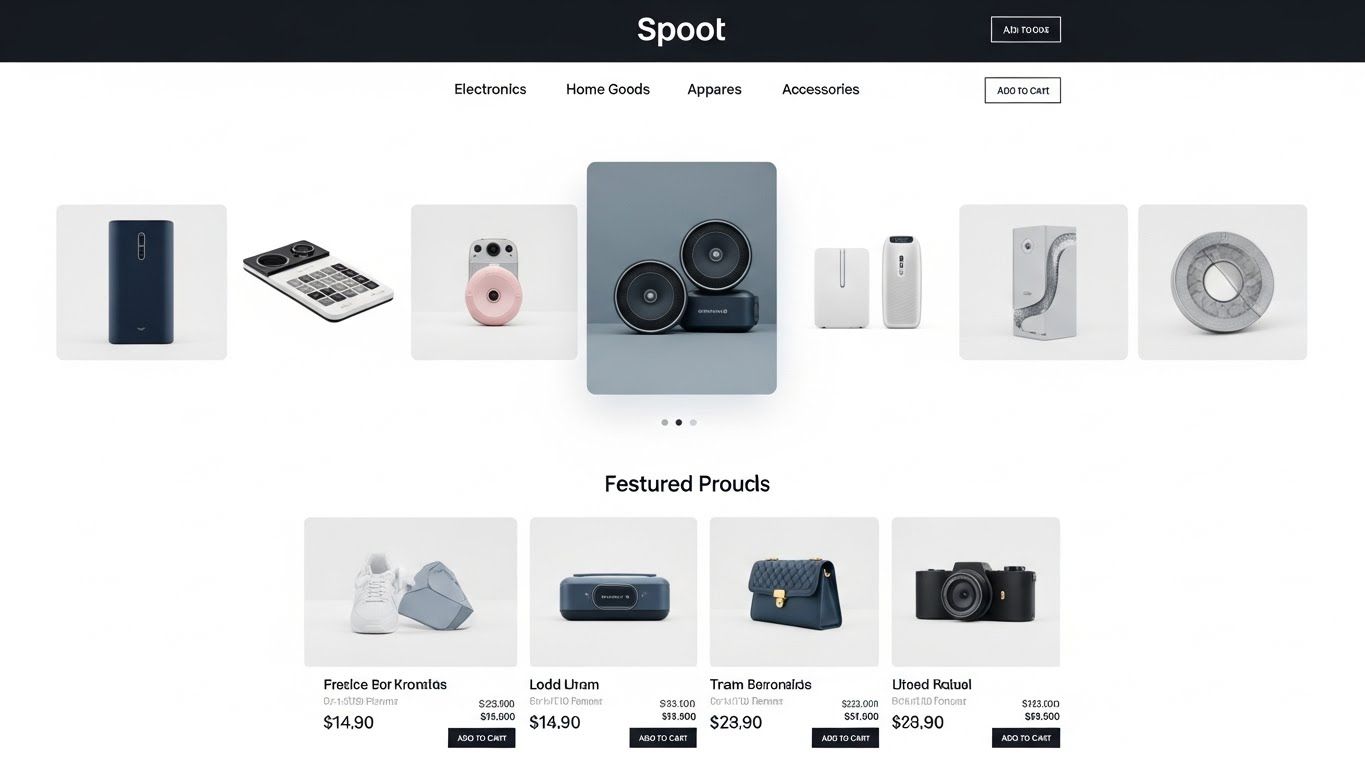
Here’s where most newbies crash: they upload *everything*—37 SKUs, 12 color variants, sizing charts longer than Moby Dick. 😵💫 Bad move. Data don’t lie: stores that launch with **≤5 hero products** convert 2.3x higher than cluttered ones (Baymard, 2025). Why? Focus. Clarity. *Confidence.* Your customer shouldn’t need a flowchart to buy your $28 soy candle. Pick your *best*—the one people DM you about, the one with 5-star test reviews from friends. List it. Nail the photo (natural light + white foam board = $0 studio). Write copy that *sounds like you*: ❌ *“Premium-grade artisanal aromatherapy experience”* ✅ *“Burn this ‘Midnight Rain’ candle & suddenly—your apartment smells like a moody PNW forest after drizzle.”* That’s how you **build a website to sell products** that *feel* human—not corporate.
Themes That Don’t Scream “I Used a Template” (Because Originality = Trust)
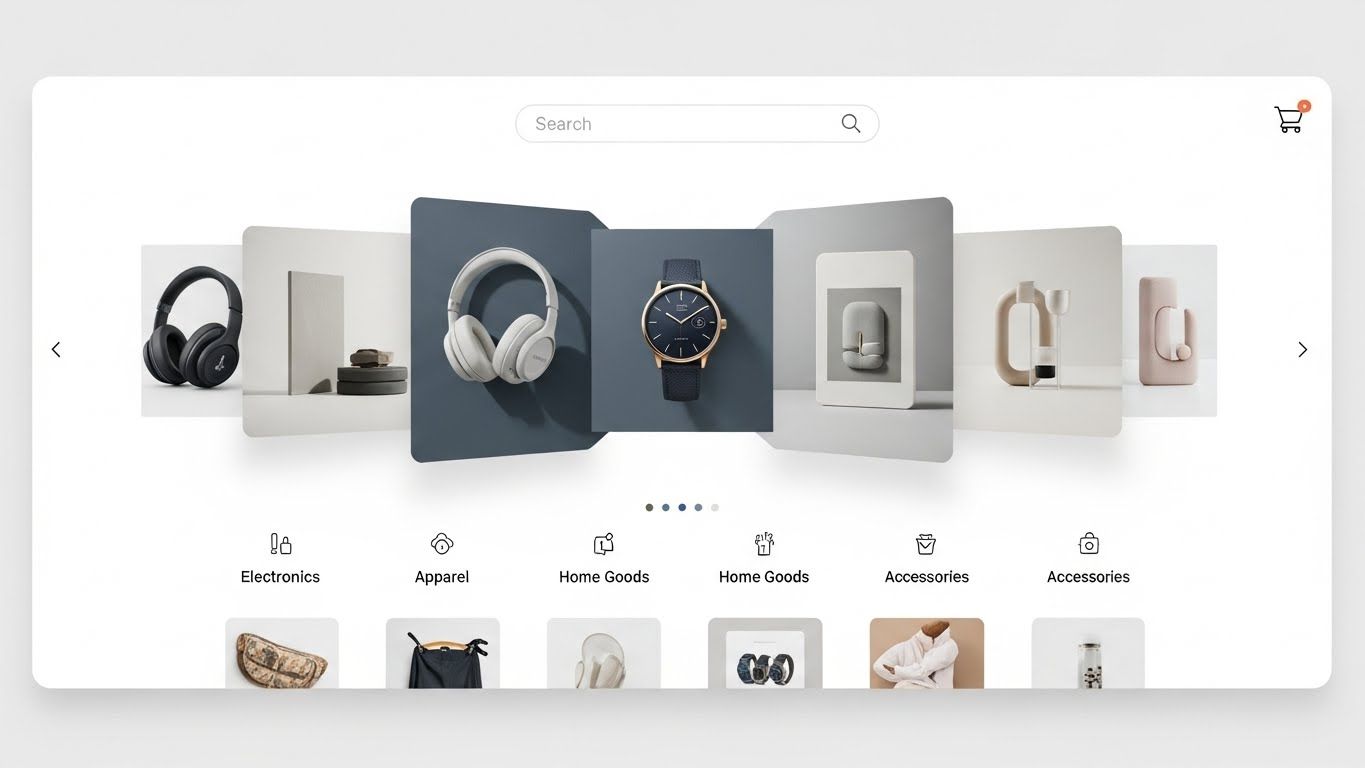
Look—your product’s unique. Your site shouldn’t look like every other “minimalist skincare” joint on IG. That’s where **build a website to sell products** gets *fun*. Wix’s *“Bloom”*? Lets you layer text over video with scroll-triggered fades. Shopify’s *“Dawn”* (free)? Clean, fast, but *begging* for custom CSS tweaks (change button radius, swap fonts, add micro-animations). Big Cartel’s *“Luna”*? Moody, editorial, perfect for ceramicists or indie musicians. The trick? *Edit in-browser.* Don’t just “publish.” Tweak. Move that CTA 20px left. Make the price bold *and* italic. Add a hover effect that *pulses* like a heartbeat. Small details whisper: *“This was made by a person. A caring one.”* And people buy from people—not platforms.
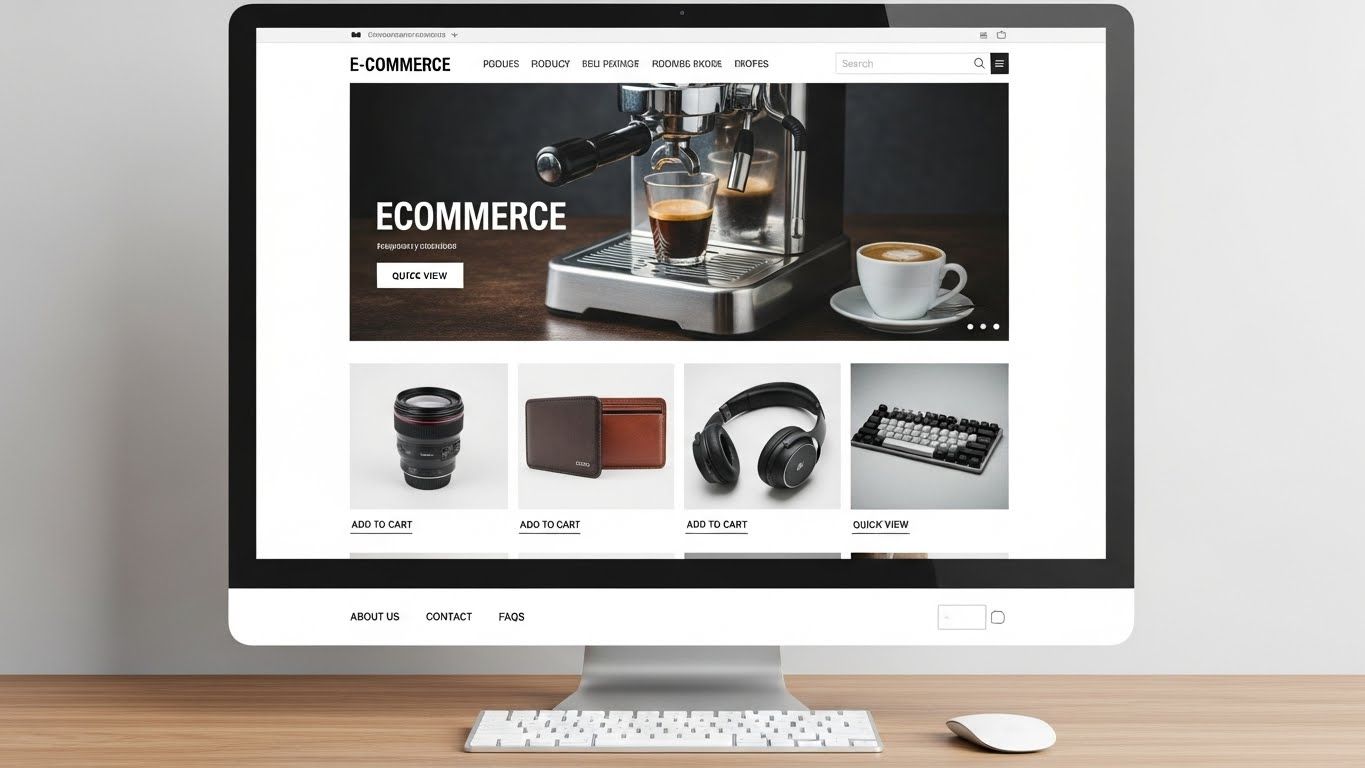
Stat check: stores with *customized* themes (even just font + color swaps) see 28% higher perceived trust (NN/g, 2024). Your **build a website to sell products** isn’t a brochure—it’s a handshake. Make it warm.
Photos That *Sell*—Not Just Show (No DSLR Required)
Let’s kill a myth: you don’t need a $3K camera to **build a website to sell products** that convert. Your iPhone 14? More than enough. Here’s the 3-shot rule: 1. **Hero shot** — product centered, clean background (white poster board + window light) 2. **Lifestyle shot** — mug in hand, candle burning on a bookshelf, tote bag slung over a bike 3. **Detail close-up** — texture of clay, stitching on leather, wax drip pattern Pro tip: use *CapCut* or *Snapseed* to tweak brightness + contrast—no filters. And *always* compress before upload (TinyPNG). A 5MB image? That’s a 4-second load time. A 300KB one? 0.6s. And 53% of mobile users bounce if a page takes >3s (Google, 2025). So yeah—**build a website to sell products** starts with *speed*, not megapixels.
Checkout: Where Dreams (and Carts) Go to Die—Unless You Fix This
Cart abandonment rate in 2025? 69.97% (Baymard). And 37% of that? Blame the checkout. Too many fields. Forced account creation. Shipping costs hidden till step 4. Ugh. Here’s how to **build a website to sell products** with *frictionless* flow: ✓ Enable *guest checkout* (always) ✓ Pre-fill city/state via ZIP (Shopify/Wix do this natively) ✓ Show shipping estimator *on product page* ✓ Add Apple Pay / Google Pay buttons (they convert 2x higher) ✓ Post-purchase: thank-you page with *one* upsell (“Love this? Pair it with…”), not five One pottery studio added a “Free local pickup in Asheville” option—and saw 22% of orders choose it. Less shipping hassle. More community vibe. That’s **build a website to sell products** as *relationship-building*—not just transactions.
SEO: Not Just Keywords—It’s *Storytelling* for Google
Y’all think SEO’s about stuffing “handmade ceramic mug” 17 times? Nah. Google’s smarter than your ex. It wants *context*. So when you **build a website to sell products**, write like you’re telling a friend: • **Product title**: *“Midnight Rain Soy Candle — 45hr Burn, Small-Batch, Asheville-Made”* • **Meta description**: *“Light this moody forest-scented soy candle & let stress melt away. Hand-poured in NC. Ships in 2 days. 100% happiness guarantee.”* • **Alt text**: *“matte black ceramic mug with ‘wild heart’ stamped in gold foil, sitting on rustic wood table beside open journal”* Use Shopify’s or Wix’s built-in SEO Wiz. Submit your sitemap. And *ping* Google via Search Console after launch. One maker ranked #1 for “small batch soy candle usa” in 6 weeks—just by blogging *once*: *“Why I Switched from Paraffin to Soy (And You Should Too).”* SEO isn’t magic. It’s *consistency with soul*.
Launch ≠ Done: Your First 72 Hours Are Everything
You hit “publish.” Now what? *Silence.* 😬 Don’t panic. Your **build a website to sell products** launch plan should look like this: • **Hour 0**: Share link with 5 closest friends—ask for *honest* feedback (“Is the price clear? Would you click ‘Add to Cart’?”) • **Hour 24**: Post on *one* platform (IG Stories > feed; TikTok > Reels) with *real* context: *“Spent 6 months testing wax blends so you don’t have to. First 10 buyers get 15% off—no code.”* • **Hour 48**: Email your personal list (yes, Gmail contacts count) with subject: *“You’re the first to see this…”* • **Hour 72**: Run a $5/day Instagram ad targeting locals (10-mile radius) for “pickup only” orders No viral fame needed. Just *real humans*, *real trust*, *real sales*. That’s how empires start.
When to Scale—and When to Stay Small (No Shame in Either)
Here’s the secret no one tells you: *you don’t have to scale*. Some of the happiest makers we know cap sales at $8K/mo. Why? They value *time* over traction. But if you’re ready to grow, here’s your **build a website to sell products** graduation path: ✓ Phase 1 (0–$3K/mo): DIY on Wix/Big Cartel. Handle orders solo. ✓ Phase 2 ($3K–$10K/mo): Upgrade to Shopify. Add Klaviyo (email) + Loox (reviews). Outsource fulfillment. ✓ Phase 3 ($10K+/mo): Hire a VA for CS. Explore wholesale + pop-ups. And wherever you are—stay inspired. Swing by: Public Market for tools that *get* makers, Ecommerce for no-fluff strategies, or steal design inspo from Shopify Site Designer Tools and Tips. Your **build a website to sell products** journey? It’s not a race. It’s a rhythm—and you set the beat.
Frequently Asked Questions
Can I make my own website to sell products?
Absolutely—you can 100% make your own website to sell products, even with zero coding skills. Platforms like Shopify, Wix, and Big Cartel offer drag-and-drop builders, secure checkout, and mobile optimization out of the box. Most folks launch a live store in under a day. The key to successful build a website to sell products? Start small (5 products max), use real photos, and focus on *clarity*—not complexity.
What is the best website builder for selling products?
The “best” depends on your vibe: Shopify for scalability (50+ SKUs, teams), Wix for visual freedom (artists, designers), Big Cartel for simplicity (solo creators, 0% fees), Squarespace for high-end aesthetics (photographers, luxury goods). For most first-timers building to sell products? Wix or Big Cartel offer the smoothest, most human-friendly path to launch—without app overload or hidden costs.
Can you make a website to sell stuff for free?
Yes—for real! Big Cartel’s free plan lets you build a website to sell products forever (up to 5 items, 0% transaction fees). Wix and Shopify offer free trials (3–14 days) to build your full store before paying. You’ll still need a domain (~$12/yr), but you can test demand, collect pre-orders, and validate your idea—*without* spending a dime upfront. Just remember: free plans often lack custom domains or advanced features, so upgrade once you see traction.
What is the best website to sell your products?
“Best” isn’t one-size-fits-all—but for *direct control, branding, and profit*, owning your own site (via Shopify, Wix, etc.) beats Etsy or Amazon long-term. Why? No 6.5%+ fees, no algorithm jail, and full customer data. You keep 100% of the relationship—and 100% of the margin. So while marketplaces are great for discovery, the ultimate goal of any serious build a website to sell products journey is: *your domain, your rules, your community*.
References
- https://www.baymard.com/lists/cart-abandonment-rate
- https://www.nngroup.com/articles/ecommerce-design-usability/
- https://web.dev/vitals/
- https://www.shopify.com/blog/ecommerce-statistics