Corporate Ecommerce Website Design Best Practices
- 1.
What Even *Is* Corporate E-Commerce—And Why Should Big Biz Even Bother?
- 2.
Peelin’ Back the Layers: The Four Flavors of E-Commerce (Spoiler: Only One’s for the Big Dogs)
- 3.
Makin’ It Legal: Do You *Really* Need an LLC Before You Drop That “Shop Now” Button?
- 4.
The Holy Trinity (Well, Trio) of E-Commerce: The 3 C’s That Keep the Cash Flowin’
- 5.
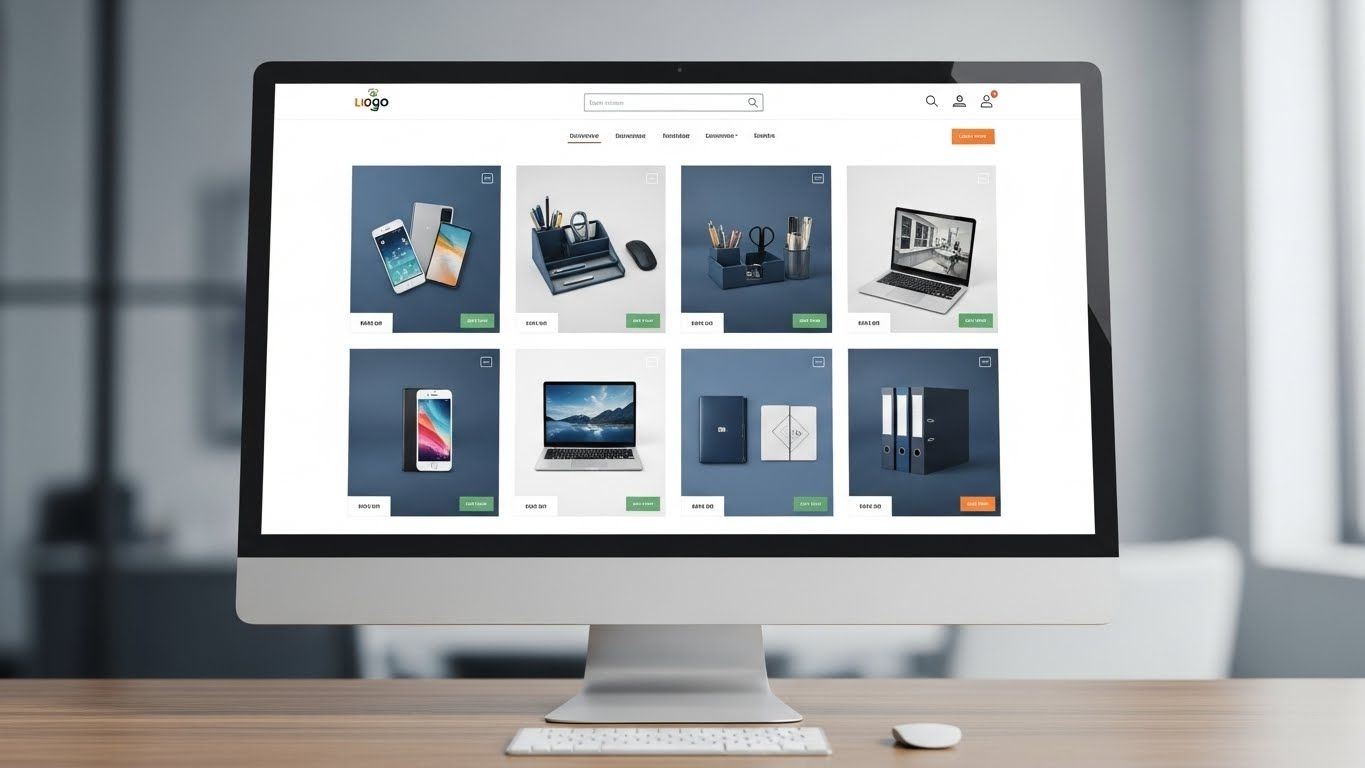
Behind the Pixels: What Actually *Goes Into* a Corporate-Grade E-Commerce Site?
- 6.
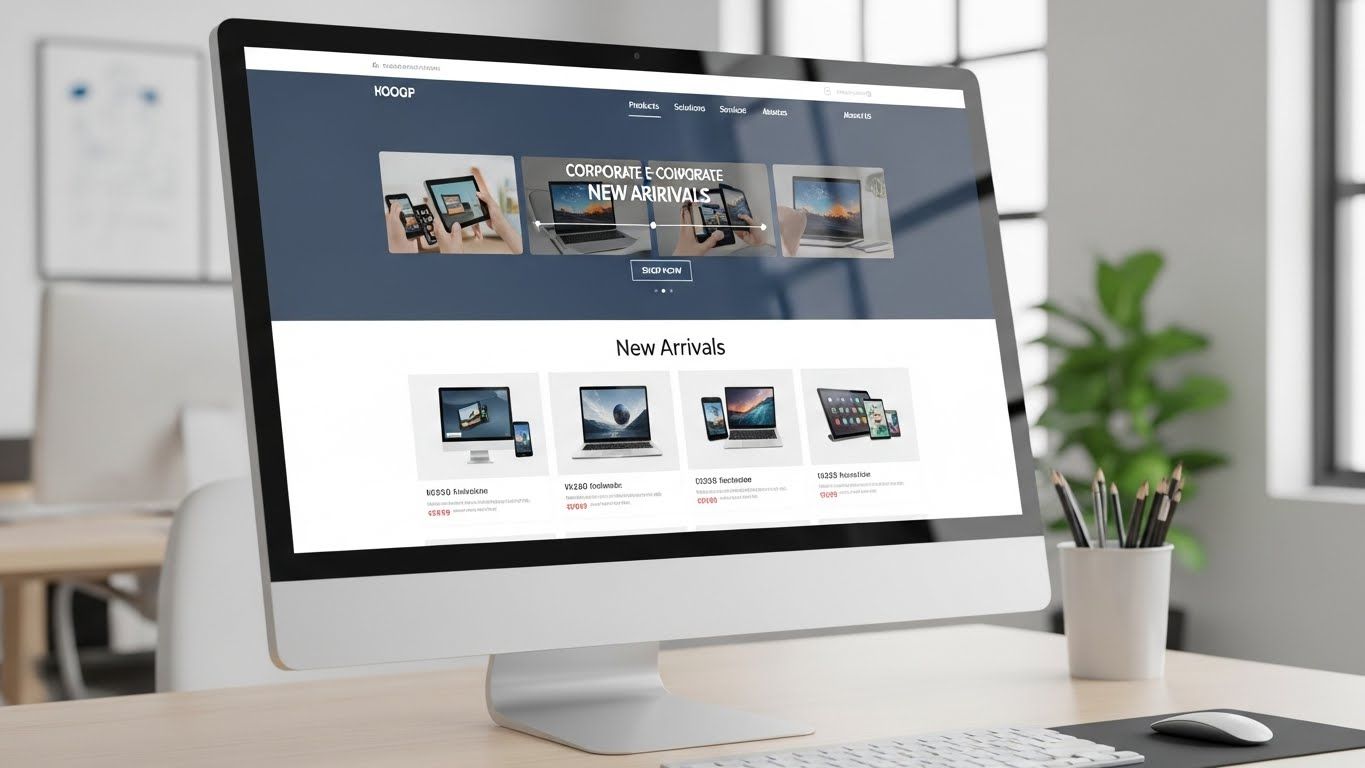
Stats Don’t Lie: Why Big Biz Is Dumping Catalog PDFs for Digital Portals
- 7.
Common Pitfalls—Where Even Smart Teams Face-Plant (and How to Dodge ‘Em)
- 8.
Tools of the Trade: Platforms That Can Actually Handle the Heat
- 9.
UX Nuances: Why “Simple” Is Harder Than “Fancy” in B2B
- 10.
Future-Proofing: Where corporate ecommerce website design Is Headed in 2026–2027
Table of Contents
corporate ecommerce website design
What Even *Is* Corporate E-Commerce—And Why Should Big Biz Even Bother?
Ever walked into a Walmart, grabbed a carton of oat milk, and thought, “Man, this’d be *way* smoother if it felt like a Shopify store—but, y’know, with quarterly reports and PowerPoint decks”? Nah, just us? 😅 Well, welcome to the wild, slightly-confusing world of corporate ecommerce website design—where boardrooms meet bandwidth, and C-suite execs argue about CTR over cold brew. At its core, corporate e-commerce ain’t your cousin’s Etsy dropshipping hustle. It’s the digital storefront of Fortune 500s, B2B giants, and enterprise-scale operations that move six figures *before lunch*. Think IBM selling cloud infrastructure online, or Caterpillar leasing heavy machinery via a slick portal—not just “add to cart,” but “add to fiscal quarter.” And yeah, the design part? It’s not just slapping a logo on a template. Nah, son. It’s UX strategy, compliance layers, ERP integrations, and making sure the damn thing doesn’t melt when 10k procurement officers hit “submit PO” at once. That, friends, is where corporate ecommerce website design becomes less *web dev* and more *digital infrastructure warfare.
Peelin’ Back the Layers: The Four Flavors of E-Commerce (Spoiler: Only One’s for the Big Dogs)
Google tells us there are four types of e-commerce—and honestly? It’s like ordering coffee: some folks want black, some want a caramel macchiato with oat foam and guilt. Let’s break ‘em down, with extra foam:
- B2C (Business-to-Consumer) → Amazon, Nike, Glossier. You click. You buy. You wait for the UPS guy like he’s Santa.
- B2B (Business-to-Business) → Alibaba, ThomasNet. Bulk pricing, net-60 terms, and PDF spec sheets longer than *War and Peace*.
- C2C (Consumer-to-Consumer) → eBay, Facebook Marketplace. “Gently used treadmill (never assembled). $75 OBO.”
- C2B (Consumer-to-Business) → Upwork, Fiverr. Freelancers flipping the script: *“You* pay *me* to fix your cursed WordPress site.”
But here’s the kicker—corporate ecommerce website design mostly lives in the B2B realm, where shopping carts have line-item approvals, quotes need digital signatures, and “checkout” means routing through legal *and* finance. Try slapping a “Buy Now” button on a $250,000 industrial laser cutter. Go on. We’ll wait.
Makin’ It Legal: Do You *Really* Need an LLC Before You Drop That “Shop Now” Button?
Y’all ever see a Shopify store selling $3 bath bombs and think, *“That lil’ homie probably ain’t filed an LLC yet”*? Probably true. But when we’re talkin’ corporate ecommerce website design, skipping the legal scaffolding is like building a skyscraper on sand—*technically* possible, until the first stiff breeze.
Short answer? Yeah, you likely need an LLC—or a C-Corp, or S-Corp, or whatever your tax attorney mumbles over bourbon. Why? Three words: liability, scalability, credibility. An LLC shields your personal assets (bye-bye, seized Tesla), makes investors less twitchy, and—bonus—lets you open a *business* Stripe account without raising red flags. Plus, enterprise clients? They won’t sign a $500k contract with “Dave’s Sick Webstore” unless Dave’s got an EIN and Articles of Org. registered in Delaware. So while a solopreneur can *start* solo, real-deal corporate ecommerce website design demands real-deal structure. No cap.
The Holy Trinity (Well, Trio) of E-Commerce: The 3 C’s That Keep the Cash Flowin’
Forget “location, location, location.” In the world of corporate ecommerce website design, the mantra is: Content, Commerce, Connection. Let’s unpack that holy trinity:
| The C | What It Means | Why It Matters for corporate ecommerce website design |
|---|---|---|
| Content | Product specs, whitepapers, case studies, API docs, ROI calculators | B2B buyers don’t impulse-buy. They research. For *weeks*. Your site better feed that beast. |
| Commerce | Complex pricing (tiered, contract-based), approval workflows, PO support, multi-currency | No one’s typing their Amex into a $120k server order. They need *procurement-grade* checkout. |
| Connection | CRM sync, live chat w/ product specialists, post-sale portals, renewal alerts | E-commerce ain’t “one-and-done.” It’s the *start* of a 5-year relationship. Nurture it—or lose it. |
Slap generic Shopify themes on top of this? Bro. You’d get laughed outta the procurement meeting. Corporate ecommerce website design isn’t decoration—it’s *orchestration.
Behind the Pixels: What Actually *Goes Into* a Corporate-Grade E-Commerce Site?
Alright, let’s geek out—what’s under the hood of a site that makes IBM or Siemens look *effortlessly* slick while moving millions daily? Hint: it ain’t WordPress + WooCommerce (bless its heart).
First off—architecture. We’re talkin’ headless CMS (hello, Contentful), composable commerce (Modular = future-proof), and microservices that scale like yeast in warm water. Then there’s integration city: ERP (SAP, Oracle), PIM (for 10k SKUs), DAM (brand assets on lock), and CRM (Salesforce—obvi). Oh, and security? SOC 2 Type II compliance ain’t optional when you’re storing client credit terms and shipping logistics. Add in multi-site, multi-locale, multi-currency (USD, EUR, JPY, *and* CAD? Check), role-based dashboards (procurement vs. engineering sees *different* things), and dynamic quoting engines that auto-apply volume discounts… yeah. This is **corporate ecommerce website design** on hard mode. As one dev put it: *“It’s not building a store. It’s building a digital supply chain.”*
Stats Don’t Lie: Why Big Biz Is Dumping Catalog PDFs for Digital Portals
Let’s drop some truth bombs, courtesy of Gartner & Forrester (circa 2024–2025):
- 73% of B2B buyers say they’d *abandon* a vendor if their e-commerce experience lagged behind B2C (like, say, Amazon Prime).
- Companies with mature corporate ecommerce website design see 22% higher average order value (AOV) and 31% faster sales cycles.
- Self-service portals cut inside sales rep workload by ~40%—freeing them up for *actual* complex deals.
- Mobile B2B commerce grew 127% YoY in 2025. Yes, *mobile*. Turns out procurement managers *do* check RFQs at 2 a.m. in hotel rooms.
Translation? If your “e-commerce” is still a PDF catalog emailed by a sales rep named Greg… Greg’s gettin’ replaced by a React frontend and a Stripe webhook. Sorry, Greg.
Common Pitfalls—Where Even Smart Teams Face-Plant (and How to Dodge ‘Em)
Seen it all, done it all, got the T-shirt (and the 3AM outage Slack alert): here’s where corporate ecommerce website design projects go sideways:
- “Let’s Just Add a Login” → No, Karen. Role-based access isn’t a checkbox. It’s layers of permissions, SSO (SAML/OAuth), and audit trails. One leak = lawsuit city.
- “Our ERP Is the Source of Truth!” → Cool. But if your ERP updates *once nightly*, your site shows yesterday’s inventory. Real-time sync or GTFO.
- “Mobile-Responsive = Done” → Nah. Try *mobile-optimized workflows*: quick reorder, barcode scan, offline quote saving. *That’s* mobile B2B.
- Ignoring Post-Purchase → Order placed? Cool. Now where’s the shipment tracker? Warranty portal? Renewal calendar? The *real* revenue’s in retention.
One client spent $1.2M on a shiny storefront—only to realize too late their pricing engine couldn’t handle contract-specific discounts. Oops. Corporate ecommerce website design ain’t a sprint. It’s a marathon *with landmines*.
Tools of the Trade: Platforms That Can Actually Handle the Heat
Not all platforms are created equal. Here’s the shortlist for enterprises that need more than “add to cart”:
- SAP Commerce Cloud (Hybris) — The OG. Heavy, complex, but if you’re already drowning in SAP, might as well swim deeper.
- Adobe Commerce (Magento Enterprise) — Flexible as hell, but needs serious dev muscle. Think: Lego set for architects.
- Commercetools — Headless, API-first, cloud-native. Build *exactly* what you need—no cruft.
- Bloomreach + Elastic Path — For content-rich commerce (think: Siemens selling turbines *and* whitepapers in one flow).
- Salesforce Commerce Cloud — If your CRM *is* your business, this keeps data flowing like a Vegas fountain.
Pro tip? Avoid monoliths if you plan to iterate fast. Composable > coupled. Always. A solid corporate ecommerce website design today must be *evolvable*—not fossilized.
UX Nuances: Why “Simple” Is Harder Than “Fancy” in B2B
Consumer sites *distract*—animations, pop-ups, “You might also like.” B2B? Buyers want to get in, get the spec sheet, get approval, get out. Every extra click = lost deal.
So what’s good UX in corporate ecommerce website design? Let’s see:
- Quick Order Forms — Paste 20 SKUs from a spreadsheet? Yes, please.
- Contract-Based Pricing Visibility — Log in → see *your* negotiated rates. No “call sales” gatekeeping.
- Reorder Shortcuts — “Repeat last order for Dept. 7-Q” in 2 clicks.
- Configurators — Build your custom industrial pump step-by-step (with real-time pricing).
- Embedded CAD Downloads — Engineers need .STEP files *yesterday*.
As one UX lead told us: *“We removed the hero banner. Increased conversions by 18%. Sometimes the best design is… less design.”* Deep.
Future-Proofing: Where corporate ecommerce website design Is Headed in 2026–2027
Alright, crystal ball time. Here’s where the big money’s flowing:
- AI-Powered Personalization — Not “Hi Dave!”—but *“Based on your last 3 orders and current project phase, here’s the cable bundle you’ll need next week.”*
- AR/VR Product Previews — See that $50k machine *in your actual warehouse* via iPad. No more guessing clearance heights.
- Blockchain for Provenance — Track raw materials from mine to motherboard. ESG compliance on autopilot.
- Embedded Finance — “Pay in 30/60/90” at checkout? Nah. Try “Lease this fleet for 36 months” *with terms pre-approved*.
- Voice + Chat Commerce — “Alexa, reorder 500 units of PN-8872 and ship to Plant 3.” *…beep boop… done.*
Bottom line? The line between “website” and “digital business platform” is blurring fast. And corporate ecommerce website design is the glue holding it all together. Speaking of glue—check out Public Market for the latest on digital commerce shifts, dive into our Ecommerce section for deep dives, or geek out on aesthetics with our piece on Designer E-Commerce Websites: A Showcase.
Frequently Asked Questions
What are the 4 types of e-commerce?
The four core models are B2C (Business-to-Consumer, like Apple.com), B2B (Business-to-Business, like Grainger), C2C (Consumer-to-Consumer, like eBay), and C2B (Consumer-to-Business, like Shutterstock contributors). For corporate ecommerce website design, B2B dominates—where transactions are high-value, relationship-driven, and process-heavy.
What is the meaning of e-commerce corporate?
“E-commerce corporate” (or corporate e-commerce) refers to digital sales platforms built for large enterprises—think integrated ERP, complex pricing, multi-tier approvals, and enterprise-grade security. Unlike SMB stores, corporate ecommerce website design prioritizes scalability, compliance, and seamless backend ops over flashy themes.
Do I need an LLC for e-commerce?
For solo or small-scale e-commerce? Maybe not *yet*. But once you’re handling serious volume, contracts, or enterprise clients—absolutely. An LLC (or corp) limits liability, boosts credibility, and is often required for B2B partnerships. Skipping it in corporate ecommerce website design contexts is like skydiving without a chute: thrilling until the ground rushes up.
What are the 3 C's of e-commerce?
The 3 C’s are Content (product data, guides, specs), Commerce (transaction engine, pricing, checkout), and Connection (CRM, post-sale engagement, loyalty). In corporate ecommerce website design, these aren’t silos—they’re interlocking gears. Miss one, and the whole machine grinds to a halt.
References
- https://www.gartner.com/en/marketing/insights/articles/b2b-ecommerce-trends-2025
- https://www.forrester.com/report/the-future-of-b2b-ecommerce-platforms
- https://www.mckinsey.com/industries/technology-media-and-telecommunications/our-insights/the-b2b-ecommerce-imperative
- https://www.statista.com/statistics/b2b-ecommerce-growth-us-market