Ecommerce Services Website for Growth

Table of Contents
ecommerce services website
Wait—So What *Exactly* Is an ecommerce services website Anyway?
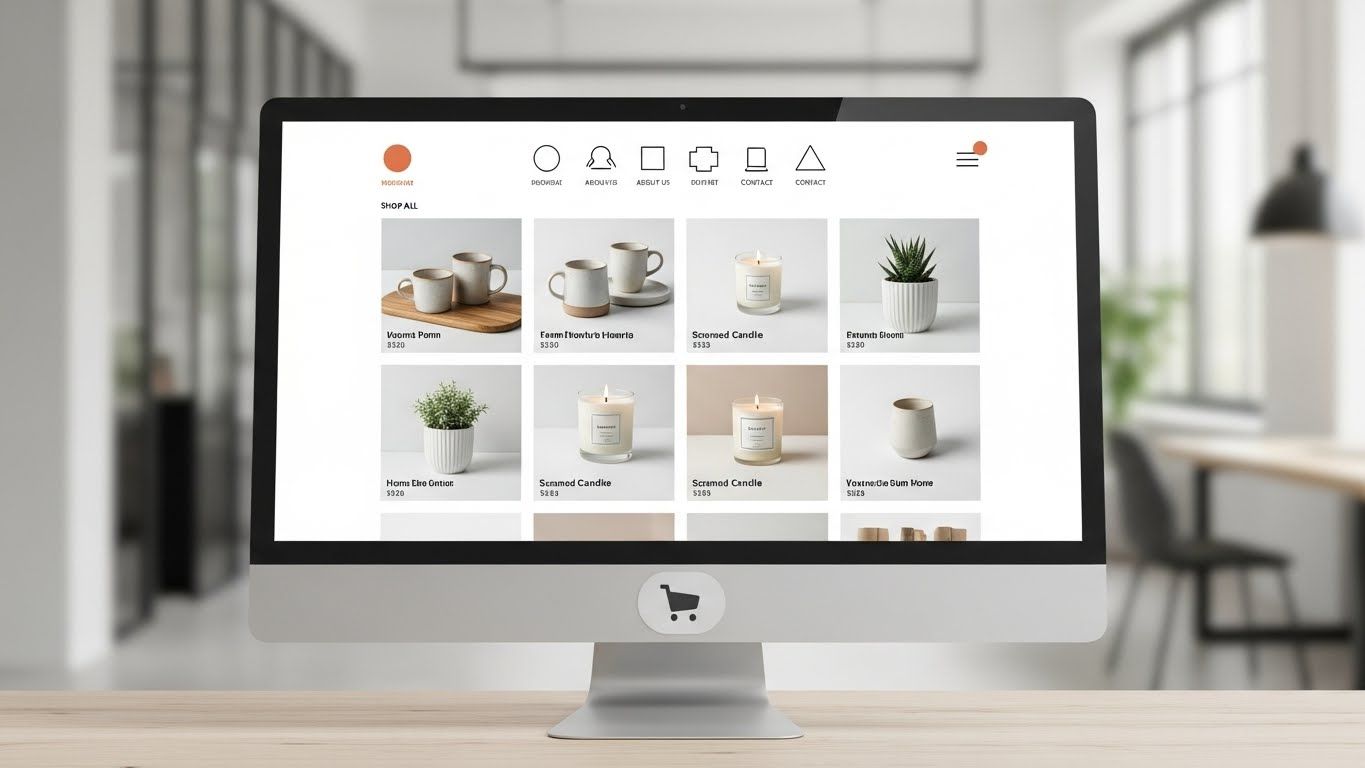
Y’all ever try to explain Shopify to your cousin at Thanksgiving, and they squint at you like you just said, *“I monetize cloud-based synergies using Web3-native funnels”*? 😅 Yeah. Let’s cut through the jargon with a hot biscuit of truth: an ecommerce services website ain’t just a “store.” It’s the *whole dang ecosystem*—hosting, payments, inventory sync, email flows, tax logic, abandoned-cart texts that read like breakup letters (“We miss you… and your $42 denim shirt”). Think of it like this: if your online biz were a food truck, the ecommerce services website is the chassis, the fryer, the POS system, *and* the guy who yells “ORDER UP!”—all rolled into one slick, API-friendly package. Without it? You’re grillin’ on a folding table in a parking lot. No shade—but we aim higher.
Shopify: The Swiss Army Knife of ecommerce services website Platforms
If the ecommerce services website universe had a prom queen, Shopify wouldn’t just win—it’d redesign the crown, sell merch of the coronation, and livestream the afterparty. With 4.3M+ merchants (from indie candle slingers to Kylie Jenner), it’s the platform that turned “I have an idea” into “I have a COO” before your cold brew even hits the table. Why? Because it *just works*.
Shop Pay = Magic
One-tap checkout. 50% faster load. 1.72x higher conversion. That’s not tech—that’s *psychic retail*.
App Store on Steroids
Need AI-powered upsells? Loyalty programs that give points for TikTok shares? A bot that texts “Your cart’s gettin’ cold…”? 8,000+ apps. Pick your power-up.
It’s not the *cheapest*—but for most folks? It’s the *smoothest*. And in the biz of trust + speed, smooth *sells*.
BigCommerce: The Enterprise Whisperer in the ecommerce services website Space
Shopify’s the cool startup founder. BigCommerce? The sharp-dressed CFO who shows up in a Tesla, sips matcha, and says, *“Let’s talk scalability.”* Built for mid-market to enterprise brands (think Skullcandy, Ben & Jerry’s, Ford Performance), it shines where others sweat:
- No transaction fees—ever. (Yes, really.)
- Built-in multi-currency & multi-lingual—no clunky add-ons.
- Deep ERP/CRM integrations (NetSuite, Salesforce, HubSpot) that don’t require a dev degree.
It’s pricier ($29.95–$299.95/mo), but for brands processing >$500K/year? The ROI’s real. BigCommerce doesn’t *help* you grow—it *anticipates* the growth. And that’s pure gold in the ecommerce services website arms race.
WooCommerce: The Rebel with a Cause (and Full Control)
“But I want *total* control!” — said every developer, indie brand, and WordPress loyalist ever. Enter WooCommerce: free, open-source, and *infinitely* customizable. Host it on SiteGround. Skin it with Elementor. Plug in Stripe, Klaviyo, Yotpo—whatever floats your boat.
Freedom Has a Price… Literally
You’re in charge of security, updates, backups, speed optimization. One plugin clash? Boom—white screen of death at 2 a.m.
But Oh, the Glory When It Works
No platform fees. No forced upgrades. Your data? *Yours*. For bootstrappers, agencies, and control freaks (affectionate), WooCommerce remains the soul of the ecommerce services website underground—raw, powerful, and beautifully unapologetic.
Wix eCommerce: Sleek, Simple, and Surprisingly Savvy
Let’s be real—five years ago, Wix was the MySpace of websites: cute, but not *serious*. Now? It’s like that quiet kid who showed up senior year with a six-pack and a Ducati. Its drag-and-drop editor? *Chef’s kiss.* Launch a store in 20 minutes—even if your tech skill peaks at “sending memes.”
- Auto-sync inventory across web + POS
- Abandoned cart recovery baked in (no $30/mo app needed)
- AI product descriptions that don’t sound like a robot wrote ‘em (mostly)
Best for solopreneurs, creatives, local shops goin’ digital. Not for complex B2B or 10K-SKU catalogs—but for “I sell handmade earrings and need to look pro yesterday”? Wix is *that* friend who loans you their good jacket before the date. Reliable. Stylish. Underrated. And absolutely earnin’ its spot in the ecommerce services website hall of fame.

Squarespace Commerce: Where Aesthetics Meet Algorithms
If your brand’s vibe is “minimalist loft with one perfect orchid,” Squarespace’s your soulmate. Designers *weep* at its templates—clean, typographically lush, mobile-perfect out the gate. But don’t mistake beauty for fluff:
Real Commerce Muscle
Advanced shipping rules (free over $75? Only in ZIPs 90210–90291?), subscription logic, member-only products—it’s all there.
The Catch?
Less app flexibility than Shopify. No native POS (yet). And that gorgeous checkout? Can’t be *fully* customized (brand purists, we see you grittin’ your teeth). Still—for creatives, artists, wellness coaches who live/die by *look and feel*? Squarespace proves an ecommerce services website can be both art *and* engine.
The 4 Types of E-Commerce—And Which ecommerce services website Fits Each
Not all online biz is created equal. Know your model—or risk buildin’ a sports car when you needed a pickup truck:
| Type | What It Is | Best ecommerce services website | Why |
|---|---|---|---|
| B2C (Business-to-Consumer) | Sellin’ direct to folks (e.g., Allbirds, Glossier) | Shopify | Speed, trust, marketing tools built-in |
| B2B (Business-to-Business) | Wholesale, bulk orders, tiered pricing | BigCommerce + Handshake | Native B2B features: quotes, approvals, net terms |
| C2C (Consumer-to-Consumer) | Marketplaces (e.g., Etsy, eBay-style) | Sharetribe or Arcadier | Multi-vendor, commission splits, dispute mgmt |
| D2C (Direct-to-Consumer) | Brand owns full journey (no Amazon middleman) | Shopify or WooCommerce | Brand control, data ownership, repeat LTV focus |
Mix ‘em up? Sure—Nike does B2C *and* D2C *and* limited B2B. But pickin’ the right ecommerce services website starts with honesty: *Who are you sellin’ to—and how do they wanna buy?*
Headless Commerce: The Future (or Just Fancy Overkill?)
“Headless” sounds like a horror flick—but it’s just decoupling the *front end* (what customers see) from the *back end* (inventory, payments, logic). So your Shopify backend powers:
- A blazing-fast React storefront
- An AR try-on in Instagram
- A voice app on Alexa: *“Reorder my oat milk, Karen.”*
Brands like Nike, Target, and Gymshark use it for speed + flexibility. But—*big but*—it costs $50K+ to set up and needs a dev team on speed dial. For 95% of sellers? Overkill. But for high-growth, omnichannel plays? Headless is the secret weapon in the next-gen ecommerce services website arsenal. Just don’t try it in your PJs on a Sunday. (Trust us.)
Hidden Gems: Underrated ecommerce services website Contenders
While the big boys hog the spotlight, these niche players are slayin’ in the shadows:
- Ecwid: Embed a store into *any* site (WordPress, Wix, even a Google Site) in 5 mins. Perfect for local bakeries, coaches, artists.
- Shift4Shop (formerly 3dcart): Free plan, no transaction fees, *and* built-in SEO tools. The dark horse for bootstrappers.
- Snipcart: A *cart-as-a-service*—add buy buttons to static sites. Ideal for devs who hate reinventing the checkout wheel.
They won’t run Fortune 500s—but for lean, mean, mission-driven micro-brands? These ecommerce services website underdogs deliver serious bang for near-zero bucks.
What’s Next? Trends Shaping the ecommerce services website Landscape
The game’s changin’—here’s what’s comin’ down the pipe:
AI That *Anticipates*, Not Just Reacts
Soon: your platform suggests *“Run a flash sale on slow-movers—your audience’s cortisol levels spike at 8 p.m. on Sundays.”* (Okay, maybe not *that* creepy—but close.)
Embedded Finance = New Revenue Stream
Offer “Pay in 4” *and* earn interchange. Lend to loyal customers. White-label credit cards. The ecommerce services website of tomorrow isn’t just a store—it’s a bank, a therapist, and a hype man.
Ready to build—or rebuild—your digital empire? Start here:
- Public Market — where commerce meets clarity
- Ecommerce — deep dives, zero fluff
- best seller online products to shop now — what’s flyin’ off shelves (and why)
FAQ: Your Burning Questions About ecommerce services website
Which website is best for ecommerce?
For most folks? Shopify. It balances ease, power, and scalability better than anyone—especially for B2C and D2C brands. But “best” depends on your needs: • Bootstrapper on a budget? WooCommerce (free core, but tech-heavy). • Enterprise with complex B2B? BigCommerce. • Designer-first brand? Squarespace. The true “best” ecommerce services website is the one that *grows with you*—not just the one with the shiniest demo.
What's the best ecommerce website builder?
Hands down: Shopify for full-featured commerce, and Wix for simplicity + design. Shopify’s app ecosystem and reliability make it the gold standard—especially with Shopify Magic (AI tools) rolling out fast. Wix wins for non-techies who want pro results *fast*. WooCommerce is powerful—but it’s not a “builder”; it’s a *framework*. So if you want drag-and-drop + zero server stress? Shopify or Wix. Both dominate the ecommerce services website builder space for different—but equally valid—reasons.
What are the 4 types of e-commerce?
The big four are: 1. B2C (Business-to-Consumer) — like Warby Parker sellin’ glasses to you. 2. B2B (Business-to-Business) — like a wholesaler sellin’ pallets of protein powder to gyms. 3. C2C (Consumer-to-Consumer) — like eBay or Poshmark, where users sell to each other. 4. D2C (Direct-to-Consumer) — brands bypassing retailers (e.g., Casper, Dollar Shave Club). Some add C2B (influencers getting paid by brands) or B2G—but these four form the backbone. And crucially: your ecommerce services website must align with your model. A B2B store needs quotes & approvals; a D2C brand needs storytelling & retention flows. Match the tool to the trade.
What is the most popular e-commerce platform?
Globally? Shopify—by a landslide. It powers ~10.7% of all U.S. e-commerce and dominates new store launches (62% of new DTC brands in 2024, per Shopify data). WooCommerce has more *total* sites (since it’s free + open-source), but many are inactive or brochureware. For *active, revenue-generating* stores? Shopify’s the people’s champ. Its ease, reliability, and ecosystem make it the default choice—and thus, the most popular ecommerce services website platform on the planet.
References
- https://www.shopify.com/research/state-of-commerce-2025
- https://www.bigcommerce.com/ecommerce-reports/
- https://w3techs.com/technologies/details/cm-woocommerce
- https://www.forrester.com/report/the-future-of-headless-commerce/